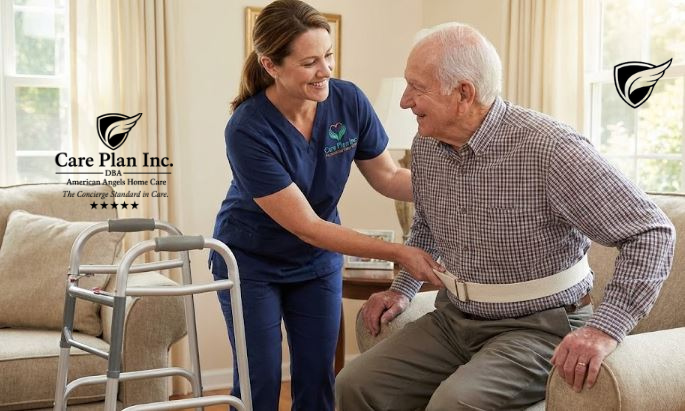
For distinguished families in Southeast Michigan, spanning the historic waterfront estates of Grosse Pointe to the refined neighborhoods of Bloomfield Hills and Birmingham, the decision to bring a professional into the home is a significant life transition. It is an act of profound trust that requires more than just a background check: it requires a clinical guarantee of safety and competence. In 2026, the standard for elite home support has evolved beyond simple companion services. Families now demand a sophisticated nurse led private duty home care model that prioritizes rigorous vetting, specialized training, and continuous clinical supervision. Understanding how these pillars support the safety of an aging parent is essential for families who require a concierge level of coordination.
At Care Plan Inc., we recognize that a caregiver is only as effective as the clinical authority that stands behind them. By utilizing licensed Registered Nurses to oversee the selection, education, and daily performance of our team, we ensure that the quality of life for our clients remains the primary focus. This guide provides a high authority analysis of the necessity for background checks, training, and supervision, localized for families in Oakland and Wayne Counties who require professional clinical precision in their home care strategy. For more information on our specific approach, visit our concierge home care page.
For families seeking guidance, it is crucial to consider the essential questions to ask home care providers to ensure the best fit for their loved ones. This includes understanding the caregiver’s qualifications, experience, and approach to care.
The Michigan Regulatory Gap: Why Professional Vetting is Non-Negotiable
Michigan remains one of the few states where the non-medical home care industry is largely unregulated. This means that, by state law, almost any individual can market themselves as a caregiver without formal oversight or standardized background requirements. For families in high-value communities like Northville or Troy, this regulatory gap places a heavy burden of due diligence on the household. Without a professional partner, the family inadvertently becomes the clinical manager, responsible for identifying subtle changes in health status and managing safety protocols: a burden that often leads to burnout and medical errors.
The Risks of Independent Hiring
Hiring an independent worker through a digital platform or a registry model may seem convenient, but it lacks the clinical scaffolding necessary for long term safety. In these models, background checks are often basic criminal scans that do not account for healthcare-specific registries or behavioral patterns. A nurse led agency removes this risk by implementing a multi-layered vetting process that views the candidate through a clinical lens, ensuring that the individual entering your home possesses the temperament and the skills required for high acuity senior support.
The Anatomy of a Professional Background Check in 2026
A high-authority background check today must go beyond a standard courthouse search. For families in Southeast Michigan who value discretion and security, the vetting process must include several specific clinical and character based layers. At Care Plan Inc., our Registered Nurses participate in the interview process to evaluate a candidate’s clinical intuition alongside their history.
Comprehensive Criminal and Registry Searches
Vetting must include a nationwide criminal search, but for senior care, the most important records are often the OIG (Office of Inspector General) exclusion list and the sex offender registry. These databases identify individuals who are prohibited from working in healthcare settings due to past abuse, neglect, or fraud. For seniors in Bloomfield Hills or Birmingham, ensuring that a caregiver has a clean driving record is also vital, as transportation to appointments at Corewell Health or local social events is a common component of concierge care.
Behavioral Vetting and Professional References
The most important part of a background check is the verification of professional references from previous clinical supervisors. We speak with other nurses and healthcare managers who have observed the caregiver’s performance in high stress situations. We look for patterns of reliability, empathy, and the ability to follow a complex plan of care. This character based vetting is what distinguishes a concierge professional from a standard employee.
| Screening Layer | Data Source | Clinical Significance |
|---|---|---|
| National Criminal Scan | State and Federal Courts | Identifies history of violent or fraudulent behavior. |
| OIG Exclusion List | Dept. of Health and Human Services | Flags individuals barred from healthcare participation. |
| Professional References | Previous Clinical Supervisors | Verifies reliability and technical competence. |
| RN Behavioral Interview | Licensed Registered Nurse | Evaluates emotional intelligence and triage skills. |
Specialized Clinical Training: Moving Beyond Basic Chores
In a nurse led private duty home care model, training is not a one-time event: it is a continuous clinical education. Caregivers must be equipped to manage the specific conditions that affect Southeast Michigan seniors, from post-surgical recovery to advanced cognitive decline. Proper training is the primary tool for assessing caregiver qualifications and ensuring they can meet high standards.
Condition-Specific Education
If a senior is returning home to West Bloomfield after a cardiac procedure at Henry Ford Health, the caregiver must be trained in specific post-acute protocols. This includes monitoring for signs of fluid retention, understanding low-sodium nutritional requirements, and providing 1:1 standby assistance for physical therapy exercises. Training should also cover the management of Activities of Daily Living (ADLs) such as safe transfers, dignified hygiene assistance, and medication reminders overseen by the clinical nurse.
Dementia and Behavioral De-escalation
For seniors with Alzheimer’s or Parkinson’s, standard caregiving is insufficient. Professional training must include behavioral de-escalation techniques that address the anxiety and sundowning often associated with memory loss. At Care Plan Inc., our RNs train caregivers to use validation therapy and cognitive engagement strategies that preserve the senior’s dignity and prevent the crises that often lead to emergency room visits. This specialized knowledge is the foundation of stability for families in Grosse Pointe and Rochester Hills.
The Differentiator: Continuous Registered Nurse Supervision
The presence of a caregiver in the home is only safe if their performance is consistently monitored by a medical professional. In a concierge model, supervision is the clinical triage that keeps a senior out of the hospital. Registered Nurse oversight ensures that the care plan remains dynamic and responsive to the senior’s changing needs.
Proactive Site Visits and Health Triage
Unlike standard agencies that may only perform an annual review, a nurse led model includes regular RN site visits to the home. The nurse performs a head-to-toe environmental and physical assessment, looking for subtle markers of decline that an untrained eye might miss. Is there a minor change in skin integrity? A slight increase in verbal confusion? A dip in nutritional intake? These are clinical red flags that the RN triages immediately, coordinating with the family and the senior’s physicians to adjust the care plan before a medical crisis occurs.
Digital Care Logs and Family Transparency
Modern home care utilizes technology to ensure total transparency. Caregivers maintain detailed digital logs of every activity, from fluid intake to sleep patterns. These logs are reviewed daily by the supervising RN, providing families in Troy and Birmingham with a transparent record of the care provided. This level of accountability is vital for adult children who may live out of state or balance demanding careers, providing them with the clinical peace of mind that their loved one is being monitored by experts.
Legal Protections and Liability Mitigation
Choosing a care provider is also a significant financial and legal decision. Many families in high-net-worth Michigan communities consider hiring independent caregivers to save on immediate costs. However, this model carries enormous hidden liabilities. According to the Internal Revenue Service (IRS), most household workers are classified as employees, not independent contractors. This means the family is responsible for payroll taxes, FICA, and workers’ compensation.
The Protection of a W2-Based Agency
Engaging with a professional agency like Care Plan Inc. transfers this liability to the provider. We directly employ our staff, manage all taxes, and provide comprehensive professional liability insurance and bonding. This protects the family estate from legal suits in the event of an on-the-job injury or a medical error. For seniors in Grosse Pointe or Bloomfield Hills, this protection of family wealth is as critical as the protection of physical health. It provides a level of professional discretion and security that independent hiring cannot offer.
If you are ready to move from administrative worry to professional clinical coordination, the most effective next step is to start an intake to speak with a Registered Nurse about your family’s specific needs.
Hiring Caregivers Checklist: A Guide for Families
Essential Questions to Ask Home Care Providers
When evaluating potential care partners, use this checklist to ensure they meet the clinical and professional standards required for high-quality private duty care.
- Does a licensed Registered Nurse (RN) perform the initial assessment?
- Are caregivers W2 employees or 1099 independent contractors?
- What specific clinical training do caregivers receive for dementia or chronic conditions?
- How often does the supervising RN visit the home to review the care plan?
- Does the agency carry professional liability, bonding, and workers’ compensation insurance?
- Is there a transparent digital system for families to monitor daily care logs?
- What is the protocol if the caregiver identifies a change in the senior’s medical status?
Conclusion: Investing in Clinical Peace of Mind
Rigorous background checks, specialized training, and continuous nurse supervision are not extras: they are the essential requirements for safe aging in place. By choosing a nurse led private duty model, families in Southeast Michigan are investing in a wellness strategy that honors the senior’s past and protects their future. Whether your parent is in Birmingham or Grosse Pointe, the key is to move from reactive crisis management to proactive clinical coordination. Do not wait for a medical emergency to define your parent’s care plan. Take the lead today by engaging with professionals who prioritize clinical precision and the concierge experience. Proactive planning is the single most important factor in a successful senior care journey.
FAQ: Background Checks and Supervision
Why is an RN-led assessment better than a standard agency walkthrough?
A standard agency often sends a salesperson to conduct an intake. A nurse led assessment is a clinical project: the RN evaluates gait, cognitive acuity, medication adherence, and environmental risks. This objective data is the only way to build a care plan that actually prevents hospitalizations.
Does Medicare cover the cost of nurse supervised private care?
No. Medicare is designed for short term, acute medical recovery. Long term custodial care, which includes safety supervision and help with daily activities, is typically private pay or covered by long term care insurance (LTCI). Many families in Southeast Michigan utilize LTCI benefits to fund these concierge services.
How do you ensure a caregiver is a good personality fit?
In addition to clinical skills, our RNs evaluate the intellectual interests and social preferences of the senior during the initial assessment. We then hand-match the senior with a professional who shares those interests, ensuring the care feels like a premium support service rather than an intrusion.
What happens if a caregiver is injured in my home?
If you hire independently, you are liable for their medical bills and lost wages. If you hire through a W2 agency like Care Plan Inc., we carry comprehensive workers’ compensation insurance that protects you and the caregiver, transferring all legal and financial risk to us.
How often does a Registered Nurse visit the home for supervision?
The frequency of site visits is determined by the senior’s medical and physical acuity. For stable clients, visits may be monthly. For those with high-risk conditions or those transitioning from the hospital, visits are more frequent to ensure proper triage and adjustment of the care plan.
If you would like to learn how our nurse led coordination can provide your family with the security and clinical safety your loved one deserves, please request more information below.