
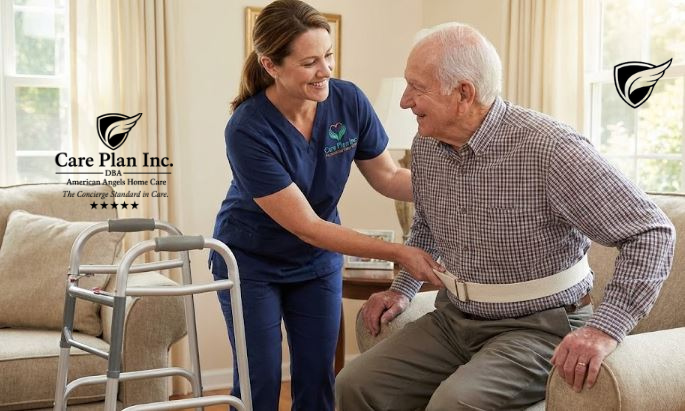
For distinguished families in Southeast Michigan, from the historic waterfront estates of Grosse Pointe to the refined neighborhoods of Bloomfield Hills and Birmingham, the desire to age in place is more than a preference. It is a commitment to maintaining a hard earned lifestyle. According to a 2024 AARP report, nearly 80 percent of adults over age 50 wish to remain in their current homes as long as possible. However, achieving this goal safely requires more than just good intentions. It demands a structured, professional framework. This is where stay at home senior care, specifically through a private duty model, becomes the essential bridge between independence and safety.
With the right support through stay at home senior care, seniors can enjoy their independence while receiving the necessary assistance to thrive.
At Care Plan Inc., we recognize that every senior has a unique health trajectory. To support longevity at home, we implement a nurse-led private duty home care model. This clinical approach ensures that non-medical assistance is guided by professional Registered Nurse (RN) oversight. By moving beyond basic companionship to a managed wellness strategy, families in Oakland and Wayne Counties can provide their loved ones with the clinical safety net required to avoid institutionalization. This guide explores the multifaceted ways private duty care extends the time seniors spend in the comfort of their own homes.
Our stay at home senior care services are tailored to each individual’s needs, ensuring they remain comfortable and safe in their own homes.
Defining Stay at Home Senior Care
The term stay at home senior care refers to a broad spectrum of services designed to support an individual within their primary residence. While many equate this solely with “hiring a helper,” the modern private duty model is far more sophisticated. It encompasses personal hygiene support, nutritional management, mobility assistance, and cognitive engagement. For seniors in Northville or Novi, this means the home remains a safe sanctuary rather than a place of environmental risk.
Understanding stay at home senior care is crucial for families looking to support their aging loved ones effectively.
The Psychology of the Home Environment
There is a profound clinical benefit to staying at home. Familiarity acts as a “cognitive anchor” for seniors, particularly those experiencing early stage memory loss. The layout of the kitchen, the height of a favorite chair, and the proximity of long term neighbors provide a sense of security that institutional settings cannot replicate. Private duty care preserves this environment while introducing the professional “scaffolding” necessary to manage physical or cognitive decline.
The benefits of stay at home senior care extend beyond just physical health; they enhance overall wellbeing.
The Nurse-Led Advantage: Why Clinical Oversight Matters
In the state of Michigan, the home care industry is largely unregulated regarding non-medical services. Any individual can call themselves a caregiver. For families who demand excellence, the distinction lies in professional oversight. A nurse-led model provides a level of authority and safety that independent “gig” workers or basic registries cannot match.
Professional stay at home senior care helps families navigate the complexities of aging while ensuring safety and comfort.
The Initial RN Assessment
Longevity at home begins with an objective clinical baseline. A licensed nurse performs a comprehensive assessment that evaluates:
- Physical Gait and Balance: Identifying fall risks before an injury occurs.
- Medication Adherence: Reviewing schedules to prevent dosing errors.
- Environmental Safety: Auditing the home for hazards like poor lighting or slippery surfaces.
- Cognitive Function: Establishing a baseline to track changes over time.
Proactive Triage and Condition Monitoring
When a caregiver is supervised by an RN, they are trained to spot “micro-changes” in health. A slight decrease in appetite, a minor change in verbal clarity, or a subtle shift in gait are often early indicators of a urinary tract infection or respiratory distress. In a nurse-led framework, these issues are triaged immediately, often preventing the emergency room visits that frequently lead to permanent facility placement. This clinical bridge is the cornerstone of stay at home senior care in Southeast Michigan.
For families considering stay at home senior care, understanding the nurse-led model can provide peace of mind.
Core Services That Promote Longevity
Core services within stay at home senior care assist in maintaining seniors’ independence and quality of life.
To help seniors stay home longer, private duty care must address the specific “points of failure” that typically force a move to a nursing home. By targeting these areas with professional precision, caregivers maintain the senior’s functional status.
1. Advanced Personal Care
Maintaining hygiene is essential for both skin health and dignity. Caregivers provide steadying assistance with bathing, dressing, and grooming. For a senior in Troy or West Bloomfield with arthritis or limited range of motion, this support prevents the “hygiene neglect” that often signals to family members that a parent can no longer live alone.
2. Nutritional Oversight and Meal Preparation
Malnutrition and dehydration are primary drivers of physical weakness in the elderly. Professional caregivers manage grocery shopping and prepare fresh, balanced meals tailored to the senior’s dietary needs, such as low sodium or heart healthy protocols. This ensures the senior maintains the physical strength required to remain mobile and independent.
By focusing on nutrition, stay at home senior care helps prevent health issues related to poor diet.
3. Medication Reminders (Not Administration)
In a non-medical setting, caregivers provide medication reminders, not administration. They ensure the senior adheres to the schedule established by their physician and overseen by the agency nurse. This adherence is critical. According to Medicare.gov, medication mismanagement is a leading cause of preventable hospitalizations for seniors with chronic conditions.
4. Specialized Dementia and Alzheimer’s Support
Cognitive decline is the most common reason families seek 24/7 support. A nurse-led approach utilizes behavioral de-escalation techniques and cognitive stimulation to manage the “sundowning” and anxiety associated with memory loss. This allows a senior in Grosse Pointe Shores to remain in a familiar, comforting environment rather than being relocated to a high stress memory care unit.
Effective stay at home senior care can significantly improve the quality of life for seniors with cognitive challenges.
Evaluating the Financial ROI of Home Care
When comparing stay at home senior care to the costs of an assisted living facility in Bloomfield Hills or Troy, families must consider the “Value of Individualized Attention.”
Investing in stay at home senior care can yield significant financial and emotional benefits for families.
| Metric | Private Duty (Nurse-Led) | Assisted Living Facility |
|---|---|---|
| Staff Ratio | 1:1 Dedicated focus | 1:15 or higher (distributed care) |
| Environment | Personal residence; social status maintained | Institutional; requires relocation |
| Flexibility | Scalable (4 hours to 24/7) | Fixed monthly high-cost room & board |
| Supervision | Direct RN oversight of your parent | General facility management |
For many families, private duty care is not only more effective but more sustainable. It allows the senior to scale up support only as needed, rather than committing to the high, fixed overhead of a residential facility from day one.
Environmental Fortification: The Home Safety Audit
A house that was safe for a 40 year old can be a maze of hazards for an 80 year old. A critical role of private duty care is environmental modification. The CDC’s STEADI initiative emphasizes that falls are the leading cause of injury for seniors. A professional safety audit identifies the specific upgrades needed to prevent these events.
Conducting a safety audit as part of stay at home senior care can help identify and mitigate potential hazards.
Essential Safety Modifications
- Bathroom Fortification: Installing grab bars, raised toilet seats, and non-slip floor treatments.
- Lighting Optimization: Ensuring hallways and stairwells are brightly lit to compensate for age related vision changes.
- Path Clearance: Removing area rugs and securing electrical cords that could cause trips.
- Kitchen Safety: Utilizing stove lock devices and organizing cabinets to prevent the need for step stools.
Integrating Technology for Enhanced Safety
In 2026, technology plays a vital role in stay at home senior care. However, technology is most effective when managed by a professional. At Care Plan Inc., we integrate clinical expertise with modern monitoring solutions.
Incorporating technology into stay at home senior care can enhance safety and connectivity for seniors.
The Role of Telehealth and Smart Devices
Telehealth allows a senior to consult with specialists without the physical strain of traveling to a clinic in Detroit or Ann Arbor. Additionally, smart home devices like voice activated assistants or automatic medication dispensers provide a secondary layer of support. When these tools are overseen by a supervising nurse, they create a “Smart Home Safety Net” that allows for 24/7 peace of mind even when a caregiver is not on shift.
Supporting the Sandwich Generation
The burden of care often falls on “working adult children” in Birmingham or Northville who are balancing their own careers and children. Attempting to provide all the care personally leads to “Caregiver Paralysis,” where the family is too overwhelmed to make proactive decisions. Professional private duty care allows the adult child to return to their primary role as a son or daughter. By delegating the physical and logistical tasks to experts, family visits can focus on emotional connection rather than chores.
Utilizing stay at home senior care allows families to preserve their relationships while ensuring their loved ones are supported.
The National Institute on Aging (NIA) emphasizes that supporting the caregiver is as important as supporting the senior. Respite care, even for a few hours a week, is a clinical necessity to prevent burnout and ensure the entire family unit remains healthy.
Conclusion: The Path Forward
Staying at home longer is a goal that requires a professional strategy. By choosing a nurse-led private duty model, families in Southeast Michigan are investing in the safety, dignity, and longevity of their loved ones. Whether your parent is in Birmingham or the Grosse Pointes, the key is to move from reactive crisis management to proactive clinical coordination. Do not wait for a fall or a medical emergency to define your parent’s care plan. Take the lead today by engaging with professionals who prioritize clinical precision and the concierge experience.
Engaging with stay at home senior care professionals is a proactive step towards ensuring your loved one’s safety and comfort.
If you are ready to explore how a managed, professional approach can help your parent age in place with grace, the first step is a clinical evaluation. You can start an intake today to have a professional nurse assess your home and your loved one’s needs.
Discovering the options available through stay at home senior care can empower families to make informed decisions.
Frequently Asked Questions
Does Medicare pay for stay at home senior care?
No. Medicare is designed for short term medical recovery. It does not cover long term “custodial” care (bathing, dressing, meal prep). These services are typically private pay or covered by long term care insurance (LTCI).
How is a nurse-led agency different from a registry?
A registry is a “referral service” that connects you with independent contractors. You remain the employer and assume all legal and clinical risk. A nurse-led agency like Care Plan Inc. employs the staff, provides insurance, and utilizes licensed nurses to oversee every aspect of the care.
Can a caregiver provide medication reminders if my parent has dementia?
Training caregivers in stay at home senior care ensures that they can meet the needs of seniors with dementia effectively.
Yes. Caregivers are trained in dementia specific communication and adherence strategies. They provide prompts and reminders to ensure the senior follows the doctor’s prescribed regimen, all overseen by a supervising Registered Nurse.
How do I know if it is safe for my parent to stay home?
A clinical assessment by an RN is the only way to determine safety objectively. The nurse evaluates mobility, cognition, and the home environment to provide a professional recommendation on whether aging in place is a viable long term strategy.
Understanding the safety measures in place for stay at home senior care is essential for family reassurance.
What happens if our primary caregiver is ill?
Managed agencies provide “backup redundancy.” If your assigned professional is unavailable, the agency provides a trained replacement who is briefed on your parent’s specific care plan, ensuring there is never a gap in safety.
Agencies offering stay at home senior care have contingency plans to ensure seamless support when staff changes occur.
If you would like to learn whether nurse-led private duty care is the right choice for your family, please request more information below.