
The decision to hire a private caregiver is a pivotal point in the management of an aging parent’s health and safety. For families in Southeast Michigan, including those in Bloomfield Hills, Birmingham, and the Grosse Pointe communities, this choice often follows a period of observation where subtle changes in a parent’s functional abilities become apparent. While the desire to maintain a parent’s independence is a primary objective, there is a critical threshold where the risks of living without professional support outweigh the benefits of unassisted independence. Identifying this threshold requires an objective assessment of physical safety, cognitive stability, and nutritional health.
Care Plan Inc. provides a nurse-led private duty home care model designed to address these concerns through structured oversight. In this model, the clinical direction is managed by licensed nurses who coordinate care planning and supervise caregivers, ensuring that non-medical assistance is delivered within a professional framework. This guide outlines the objective markers indicating that the time has arrived to transition to professional home-based support.
Defining Private Duty Home Care and the Role of the Caregiver
Private duty home care refers to non-medical assistance provided within the client’s residence. It is distinct from medical home health care, which is typically intermittent and triggered by an acute medical diagnosis. Private duty care focuses on the sustained support of activities of daily living (ADLs) and instrumental activities of daily living (IADLs). When families decide to hire a private caregiver, they are introducing a professional trained to manage the logistical and physical requirements of daily life that a senior can no longer navigate safely alone.
In the nurse-led model utilized by Care Plan Inc., caregivers operate under the direct supervision of licensed nurses. These nurses lead the care plan development and monitor for changes in condition, escalating concerns to the appropriate medical providers or family members as necessary. The caregiver’s responsibilities include assistance with personal hygiene, mobility support, and nutritional management. A primary component of this safety protocol involves medication reminders (not administration), which ensures that a parent adheres to their prescribed health regimen without the risks associated with self-management errors.
The Clinical Supervision Factor
One of the primary differences between hiring an independent caregiver and utilizing a professional agency like Care Plan Inc. is the level of clinical oversight. While a caregiver performs the day-to-day tasks, a nurse provides the necessary supervision to ensure those tasks are performed safely and effectively. This coordination includes regular assessments and the ability to adapt the care plan as the parent’s needs fluctuate. For families in areas like Troy or Novi, this structured approach ensures that the non-medical care remains aligned with the parent’s overall health strategy.
The Regulatory Environment in Michigan
It is important for families to understand the legal and regulatory context of home care in the state. Michigan does not license non-medical home care agencies in the same way it licenses medical home health agencies. Consequently, the standards of care can vary significantly between providers. Professional authority in this space is demonstrated through voluntary adherence to clinical standards, such as nurse-led supervision and rigorous caregiver screening. According to the Michigan Department of Health and Human Services (MDHHS), seniors who wish to remain in their homes benefit significantly from structured support systems that prioritize safety and environmental management.
When seeking to hire a private caregiver, families must verify that the provider maintains appropriate insurance, conducts thorough background checks, and employs their staff rather than acting as a simple registry. Care Plan Inc. operates as a professional employer of its caregivers, ensuring that every individual entering a home in Grosse Pointe Farms or West Bloomfield has been vetted and is supervised by a clinical professional.
Physical Red Flags: Objective Signs That Care Is Necessary
The need for professional intervention is often signaled by physical changes that impact safety and health. These “red flags” are objective markers that indicate a senior’s current environment is no longer sufficient to meet their needs. Families should monitor for the following indicators:
Increased Fall Frequency and Mobility Decline
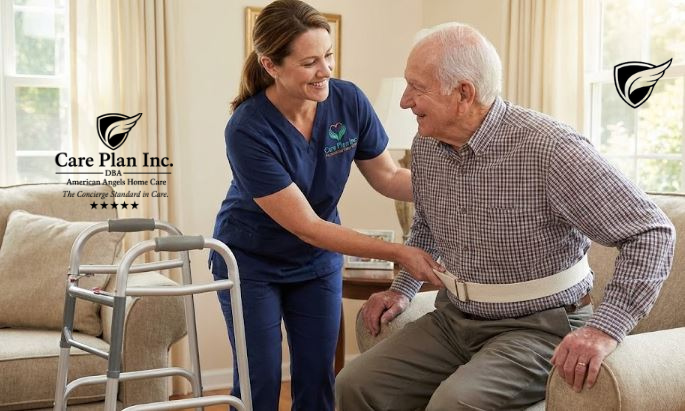
Falls are a leading cause of injury among seniors and often trigger a permanent loss of independence. If a parent is experiencing frequent “near-misses,” unsteadiness while walking, or has actually sustained a fall, the introduction of a caregiver is a safety necessity. Professional mobility support includes assistance with transfers—such as moving from a bed to a chair—and ensuring that the home environment in Southeast Michigan remains free of tripping hazards. The Centers for Disease Control and Prevention (CDC) provides extensive resources on fall prevention, noting that professional oversight is a key factor in reducing injury risk.
Decline in Personal Hygiene and Self-Care
Neglect of personal grooming is often an early sign of physical or cognitive difficulty. If a parent is no longer bathing regularly, wearing soiled clothing, or neglecting oral care, it may indicate that these tasks have become too physically demanding or that the parent is forgetting to perform them. A private caregiver provides the necessary assistance to maintain skin integrity and overall hygiene, which is essential for preventing infections and maintaining dignity.
Weight Loss and Nutritional Gaps
Unexplained weight loss or an empty refrigerator often indicates that a parent can no longer manage meal preparation or grocery shopping. Nutritional deficiency can exacerbate existing health conditions and lead to muscle wasting. Caregivers assist with meal planning and preparation, ensuring that parents in communities like Grosse Pointe Woods or Bloomfield Hills receive consistent, healthy meals that align with their dietary needs.
Medication Management Concerns
Managing multiple prescriptions is a complex task. If a parent is missing doses, taking medications at the wrong time, or forgetting to refill prescriptions, their health is at significant risk. Professional caregivers provide medication reminders (not administration), ensuring compliance with the physician’s orders and the nurse-developed care plan. This prevents the medical complications often associated with medication errors.
| Observation Area | Warning Sign | Recommended Professional Response |
|---|---|---|
| Safety | Bruising from unknown sources or recent falls | Implementation of a fall prevention protocol and mobility assistance |
| Hygiene | Strong body odors or unkempt appearance | Scheduled assistance with bathing and dressing |
| Health | Missing medication doses or refill delays | Nurse-supervised medication reminders (not administration) |
| Nutrition | Spoiled food in the kitchen or significant weight loss | Professional meal planning and preparation support |
Cognitive and Emotional Indicators for Professional Support
Beyond physical limitations, cognitive decline and emotional changes are significant factors in the decision to hire a private caregiver. Conditions such as Alzheimer’s or other forms of dementia require a structured environment that a family may find difficult to maintain without professional assistance.
Confusion and Memory Loss
While occasional forgetfulness is common with aging, persistent confusion about time, place, or the identity of familiar people indicates a need for constant supervision. Seniors with cognitive decline are at high risk for wandering or accidentally creating hazardous situations, such as leaving a stove on. A caregiver provides the necessary supervision to prevent these incidents and offers cognitive engagement that can help slow the functional impact of decline.
Social Isolation and Withdrawal
For many seniors in the Grosse Pointe City or Birmingham areas, social circles may shrink over time. Social isolation is linked to increased rates of depression and cognitive decline. If a parent has stopped participating in hobbies, avoids social interactions, or appears chronically lonely, a caregiver can provide the consistent social engagement necessary to support mental health. The National Institute on Aging (NIA) notes that social connection is a vital component of healthy aging.
Mood Changes and Irritability
Significant shifts in personality, such as increased agitation, anxiety, or apathy, can be symptoms of underlying health issues or the frustration of losing independence. A professional caregiver, operating under nurse-led oversight, can monitor these mood changes. If symptoms escalate, the nurse can coordinate with medical providers to ensure the parent is receiving appropriate medical attention while the caregiver provides a stable, calm environment at home.
The Functional Assessment: A Decision Framework
When determining if it is time to hire professional help, it is useful to evaluate the parent’s ability to perform both Activities of Daily Living (ADLs) and Instrumental Activities of Daily Living (IADLs). If a parent requires assistance in more than two of these areas, professional intervention is generally recommended.
Checklist of Activities of Daily Living (ADLs)
- Bathing: Ability to safely enter and exit a shower or tub and wash independently.
- Dressing: Selecting appropriate clothing and managing fasteners like buttons or zippers.
- Eating: The physical act of feeding oneself (separate from meal preparation).
- Transferring: Moving from a seated to a standing position or in and out of bed.
- Toileting: Managing personal hygiene and the physical requirements of using a bathroom.
Checklist of Instrumental Activities of Daily Living (IADLs)
- Meal Preparation: Planning, cooking, and cleanup after meals.
- Housekeeping: Maintaining a clean and sanitary living environment.
- Laundry: Managing washing, drying, and folding of clothes and linens.
- Shopping: Managing grocery trips and purchasing essential household items.
- Transportation: Driving or navigating public transit to reach medical appointments.
If a parent in Northville or West Bloomfield is struggling with these tasks, families should nurse-led private duty home care as a means to maintain the parent’s residence while ensuring their basic needs are met with professional reliability.
The Benefit of Professional Oversight over Independent Hiring
Families often weigh the decision to hire a private caregiver independently versus using a professional agency. While independent hiring may appear more cost-effective initially, it carries significant risks and logistical burdens that an agency model avoids. In a professional agency like Care Plan Inc., the responsibility for supervision, payroll, insurance, and clinical oversight rests with the agency, not the family.
Clinical Monitoring and Condition Tracking
At Care Plan Inc., licensed nurses supervise the caregivers and monitor the parent’s condition. This means that changes in the parent’s health are tracked professionally. If a caregiver in Grosse Pointe Park notices a change in a parent’s gait or cognitive clarity, the supervising nurse is informed immediately. This proactive monitoring allows for early intervention, potentially avoiding a crisis that could lead to hospitalization.
Caregiver Backup and Consistency
When a family hires an independent caregiver, they are responsible for finding a replacement if that caregiver is ill or unavailable. In a professional agency model, the agency manages all scheduling and provides trained backups, ensuring that the parent is never left without support. This consistency is vital for maintaining the routine that seniors require for stability. For those ready to move forward, the first step is often to start an intake to establish a baseline of care.
Financial Planning for Private Duty Care
Private duty care is generally a private-pay service. Families must consider the long-term financial implications of hiring professional support. However, this cost should be viewed through the lens of value and prevention. High-quality home care can delay or prevent the need for much more expensive residential nursing facilities.
Long-Term Care Insurance and Benefits
Many families in Birmingham or Grosse Pointe Shores utilize Long-Term Care Insurance (LTCI) to fund private duty services. These policies often cover non-medical in-home care once a senior requires assistance with a specified number of ADLs. Families should review their policies to understand elimination periods and daily benefit limits. Additionally, certain veterans’ benefits may assist with the costs of home-based support.
Value Analysis: Home Care vs. Facility Placement
The cost of 24/7 in-home care is often comparable to or less expensive than high-end assisted living or nursing home placement, particularly for couples. Furthermore, home care allows for a one-on-one caregiver-to-client ratio, which is impossible in a facility setting. This level of individualized attention ensures a higher standard of safety and health maintenance. The AARP provides comprehensive comparisons for families evaluating these options, highlighting that most seniors prefer to remain in their homes if the right support is available.
Transitioning to Professional Support: Preparing the Parent
The transition to having a private caregiver in the home can be an adjustment for the parent. Success depends on clear communication and a focus on how the support will enhance their existing independence. It is helpful to introduce the caregiver as a “professional assistant” or “concierge” who manages the logistical burdens of the home, such as laundry and meal prep, allowing the parent to focus on the activities they enjoy.
In the Southeast Michigan context, where dignity and privacy are highly valued, the Care Plan Inc. model emphasizes a quiet, professional presence. By following a nurse-led care plan, the caregiver’s role is clearly defined, which reduces friction and helps the senior understand that the intervention is a planned, clinical strategy designed for their longevity. Establishing a routine early in the engagement is essential for building the trust required for long-term success.
Conclusion
Determining when to hire a private caregiver is a decision based on the objective assessment of risk versus independence. When a parent’s physical safety, nutritional health, or cognitive clarity is compromised, professional intervention is the most effective way to preserve their quality of life. For families in Oakland and Wayne Counties, the nurse-led model provided by Care Plan Inc. offers the authority and clinical oversight necessary to ensure that home care is a safe and sustainable solution. By recognizing the red flags and utilizing a professional framework for support, families can ensure that their parents continue to live in the homes they value, supported by the clinical expertise they require.
Frequently Asked Questions
What is the difference between a private caregiver and a home health aide?
In many contexts, the terms are used similarly, but the distinction often lies in oversight. At Care Plan Inc., a private caregiver is a professional who provides non-medical assistance, such as hygiene and meal prep, while working under the direct supervision of a licensed nurse. A home health aide usually works for a medical agency providing short-term care under a physician’s orders.
How do I know if my parent is safe to be home alone?
Safety is determined by a parent’s ability to respond to emergencies, manage medication, and avoid falls. If a parent in Birmingham or Grosse Pointe has experienced a fall, misses medications, or shows signs of confusion, they should not be left alone without professional support.
Does insurance cover the cost to hire a private caregiver?
Standard health insurance and Medicare typically do not cover non-medical private duty care. However, many long-term care insurance (LTCI) policies do provide coverage. Families should check their specific policy for “home care” or “private duty” benefits.
What is the role of the nurse in private duty home care?
The nurse provides the clinical oversight. This includes performing the initial assessment, creating the care plan, supervising the caregivers, and monitoring for changes in the senior’s condition. The nurse ensures that the care being provided is safe and effective.
Can a caregiver help with transportation in Novi or Troy?
Yes. Professional caregivers can provide transportation for errands, grocery shopping, and medical appointments as part of the instrumental activities of daily living (IADLs) support. This is a core component of helping a senior remain active in their community.
What happens if the caregiver is sick?
When you work with an agency like Care Plan Inc., the agency is responsible for providing a trained backup caregiver. This ensures that the parent in Northville or West Bloomfield is never left without the support they need, which is a significant advantage over hiring an independent caregiver.