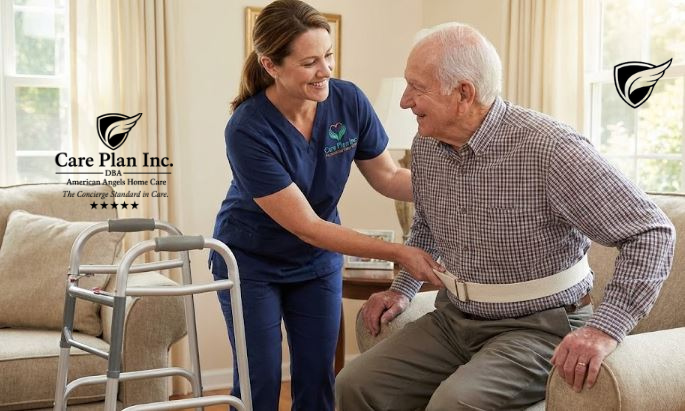
For many seniors in Southeast Michigan, the desire to remain at home is not merely a preference but a core component of their long-term wellness strategy. “Aging in place” refers to the ability to live in one’s own home safely, independently, and comfortably, regardless of age, income, or ability level. In prestigious communities like Bloomfield Hills, Birmingham, and the Grosse Pointes, families often seek a solution that preserves this independence while providing professional clinical oversight. Private duty care at Care Plan Inc. is specifically designed to meet this need through a nurse-led model that prioritizes safety, stability, and concierge-level service.
Understanding the role of home care in the aging-in-place journey requires a clear definition of services and an objective look at the clinical framework involved. Private duty care provides the necessary structure to manage daily tasks that might otherwise become hazardous or unmanageable, allowing seniors to sustain their residence without the need for institutional relocation.
The Concept of Aging in Place in Southeast Michigan
Aging in place is a comprehensive approach to senior living that emphasizes the home as the primary environment for care. For families in Oakland and Wayne Counties, this often involves adapting a private residence to accommodate the evolving physical and cognitive needs of an elderly loved one. However, modifications to the physical structure of a home are only one half of the equation; the introduction of professional support is the other.
In Michigan, the regulatory context for home care is unique. Michigan does not license non-medical home care agencies in the same way it licenses medical home health agencies. This means that families must be diligent in selecting a provider that adheres to high clinical standards voluntarily. Care Plan Inc. addresses this by utilizing licensed nurses to oversee every care plan. This nurse-led oversight ensures that the support provided is not just helpful, but clinically sound and safety-focused. According to the Michigan Department of Health and Human Services (MDHHS), the state’s aging network is increasingly focused on helping residents reach optimal health and preserve independence in their communities.
The Benefits of Staying at Home
- Maintaining Autonomy: Seniors who age in place retain control over their daily routines, diet, and social interactions.
- Psychological Well-being: Familiar surroundings and long-standing community connections reduce the risk of depression and cognitive decline.
- Personalized Attention: Unlike facility settings where staff ratios are distributed across many residents, private duty care provides one-on-one focus.
- Health Consistency: Reduced exposure to the communal infectious risks often found in institutional settings.
The Role of Nurse-Led Private Duty Care
Authority in home care comes from clinical oversight. At Care Plan Inc., private duty care is non-medical, but it is never unsupervised. A licensed nurse leads the process, starting with a professional clinical assessment that identifies the specific needs and risks of the senior. This assessment forms the basis of a structured care plan that dictates how caregivers support the client on a daily basis.
The nurse’s role is to monitor changes in condition and escalate concerns appropriately when a senior’s needs shift. This coordination ensures that the day-to-day assistance with bathing, dressing, or meal preparation remains aligned with the client’s broader health objectives. By supervising the caregivers directly, the nursing team ensures that every action taken in the home—from mobility support to nutrition—is performed with clinical competence.
| Service Type | Standard Caregiver Registry | Nurse-Led Private Duty (Care Plan Inc.) |
|---|---|---|
| Care Plan Development | Admin Staff or Family-Led | Licensed Registered Nurse |
| Safety Supervision | None / Client-Managed | Professional Nurse Oversight |
| Clinical Assessment | Initial Phone Screen | In-Home Clinical Evaluation |
| Condition Monitoring | Informal Observations | Structured Clinical Reporting |
Key Services Supporting Safety and Stability
To successfully age in place, a senior must be able to navigate the physical and logistical demands of daily life. Private duty care provides the “scaffolding” required for this success. The following core services are essential for maintaining a safe home environment in areas like West Bloomfield, Troy, and Grosse Pointe Farms.
Personal Care and Hygiene Assistance
Maintaining personal hygiene is critical for physical health and self-esteem. As mobility declines, tasks like bathing and grooming can become high-risk activities. Professional caregivers provide the necessary assistance to ensure these routines are safe and respectful. This support prevents complications like skin breakdown and ensures the senior remains comfortable and dignified in their own home.
Mobility and Fall Prevention Strategies
Falls are a leading cause of emergency room visits for individuals over 65. A nurse-led care plan at Care Plan Inc. prioritizes fall prevention through home safety evaluations and mobility assessments. Caregivers assist with transfers—such as moving from a bed to a walker—and provide steadying support during ambulation. The Centers for Disease Control and Prevention (CDC) notes that professional oversight can significantly reduce the risk of fall-related injuries, which is vital for remaining at home long-term.
Medication Reminders (Not Administration)
Compliance with medication regimens is a cornerstone of managing chronic conditions. While private duty caregivers are non-medical, they play a vital role by providing medication reminders (not administration). They ensure the senior takes the right medication at the right time, as outlined in the nurse-led care plan. This prevents the common errors associated with memory loss or vision impairment that often lead to hospital readmissions.
Nutritional Management and Meal Prep
Nutrition is often the first thing to suffer when a senior lives alone. Caregivers assist with grocery shopping, meal planning, and the preparation of fresh, healthy meals that follow any dietary restrictions. This is especially important for clients in Grosse Pointe Park or Birmingham who may be managing conditions like diabetes or hypertension that require strict nutritional adherence. Proper hydration and balanced meals support cognitive function and physical strength.
Addressing Social Isolation and Emotional Well-being
Aging in place is not just about physical health; it is about the quality of the experience. Loneliness and social isolation are significant risks for seniors who live alone. Private duty care provides consistent companionship and engagement, which are essential for emotional stability. Caregivers can accompany seniors on walks, participate in favorite hobbies, or simply provide a listening ear during daily routines.
For families in Oakland County, having a professional caregiver present means that their loved one remains connected to the world around them. This engagement is often a key factor in slowing the progression of cognitive decline and maintaining a positive outlook. The National Institute on Aging (NIA) highlights that social connection is a vital part of a senior’s safety net when living independently.
Customized Care Planning: A Decision Framework
The process of creating a nurse-led private duty home care plan is highly individualized. There is no one-size-fits-all solution for families in Northville or Novi. At Care Plan Inc., the assessment process involves evaluating several key factors to determine the appropriate level of support.
The Assessment Process
- Physical Capabilities: Evaluation of the senior’s ability to perform activities of daily living (ADLs) like dressing and bathing.
- Cognitive Status: Assessing memory and decision-making abilities to determine the need for supervision.
- Home Safety: Identifying tripping hazards, lighting needs, and the accessibility of essential rooms.
- Nutritional Requirements: Reviewing dietary restrictions and the senior’s ability to manage meal preparation.
- Social Needs: Identifying opportunities for engagement and companionship to prevent isolation.
Regular assessments ensure that as a senior’s needs evolve, the care plan is adjusted accordingly. This proactive approach allows families to increase support levels incrementally, avoiding the crisis-driven decisions that often lead to sudden facility placements. Families are encouraged to start an intake early to establish a baseline of support.
The Impact on the Family: Reducing Caregiver Stress
Aging in place is a family endeavor, but it should not be a family burden. Adult children in the “Sandwich Generation” often find themselves balancing their own careers and children with the intense demands of caring for an aging parent. Private duty care provides the professional support needed to alleviate this stress. By hiring professional help, family members can return to their roles as sons and daughters, rather than full-time care coordinators.
The peace of mind that comes from knowing a licensed nurse is supervising a parent’s care in Grosse Pointe City or Bloomfield Hills cannot be overstated. It allows families to focus on the quality of their time together, rather than the logistics of medication schedules or safety risks. Professional support also provides respite for family caregivers who may be at risk of burnout, ensuring that the caregiving environment remains stable and positive for everyone involved.
Financial Considerations for Private-Pay Families
Private duty care is a premium service that is typically private-pay. While it is not covered by Medicare, it is a strategic investment in the quality of life and longevity of a senior. Families must evaluate the cost of in-home care against the high expenses of assisted living or memory care facilities. In many cases, bringing one-on-one care into the home is more cost-effective than residential options, especially when the senior’s preference for their own environment is taken into account.
For families in Southeast Michigan, long-term care insurance (LTCI) is often used to offset these costs. Most LTCI policies will reimburse for private duty care once a senior requires assistance with a specific number of ADLs. It is important to review these policies early and consult with a professional who can help navigate the claims process. Understanding the financial landscape is a critical part of the long-term planning for aging in place.
Technology and Safety in the Modern Home
The future of aging in place involves the integration of clinical expertise with modern technology. Care Plan Inc. utilizes structured communication and monitoring tools that allow nurses to track a senior’s well-being in real-time. This can include digital documentation that families can review, ensuring transparency and coordination across the entire care team. For seniors in Northville or Troy, these tools provide an extra layer of security, allowing for prompt interventions if a change in condition is noted.
While technology is a valuable tool, it is never a replacement for human touch and clinical judgment. The value of a private duty caregiver lies in their ability to observe the subtle, non-verbal cues that a remote monitor might miss. When combined with nurse-led oversight, technology serves as an enhancer of safety, not the foundation of it.
Choosing a Local Provider in Southeast Michigan
When selecting a home care agency in Oakland or Wayne County, proximity and local expertise are paramount. A local provider understands the specific resources, healthcare systems, and community standards of areas like Grosse Pointe Woods or Birmingham. Care Plan Inc. is deeply rooted in Southeast Michigan, offering a level of responsiveness and community knowledge that national franchises often cannot match.
Researching potential agencies should involve checking for nurse supervision, background screening policies, and client reviews. An authoritative agency will be transparent about its clinical protocols and its commitment to the local community. By choosing a provider that prioritizes professional oversight, families ensure that their loved one’s desire to age in place is supported by a foundation of safety and clinical excellence.
Conclusion
Aging in place is more than just a trend; it is a dignified choice that requires a structured, professional support system. Private duty care at Care Plan Inc. provides this structure through a nurse-led model that ensures every senior in Southeast Michigan can live safely and comfortably in their own home. By focusing on personal care, fall prevention, medication reminders, and companionship, professional caregivers address the root causes of decline and help maintain the independence that seniors value most. For families in Bloomfield Hills, Grosse Pointe, and the surrounding areas, this model of care provides the clinical authority and personal attention necessary for a successful and fulfilling aging experience.
Frequently Asked Questions
What is the main difference between aging in place and assisted living?
Aging in place allows a senior to remain in their own private home while receiving tailored support, whereas assisted living requires moving to a communal residential facility where care is distributed across a large number of residents. Private duty home care focuses on maintaining independence in the senior’s familiar environment.
How does nurse supervision improve the aging-in-place experience?
Nurse supervision provides clinical insight and oversight. It means that a senior’s care plan is not just a list of tasks but a health strategy managed by a professional who can monitor for subtle changes in condition, coordinate with medical providers, and ensure safety standards are met at all times.
Are private duty care services covered by insurance in Michigan?
Private duty care is generally a private-pay service and is not covered by standard health insurance or Medicare. However, many families use long-term care insurance (LTCI) to reimburse for these costs. Families should check their specific policy for coverage regarding non-medical home care.
What happens if a senior’s needs change over time?
In a nurse-led model like Care Plan Inc., regular assessments are conducted to monitor the senior’s status. If a senior’s needs increase—due to a new medical diagnosis or cognitive decline—the nurse will adjust the care plan and coordinate with the family to ensure the appropriate level of support is provided.
Is private duty care only for seniors who live alone?
No. Private duty care is also used to provide respite for family members who live with the senior. It allows the family to share the caregiving responsibilities with a professional, reducing stress and ensuring the senior receives consistent attention throughout the day.
Can caregivers help with medical treatments?
No. Private duty care is non-medical assistance. While nurses supervise the care, the caregivers themselves do not perform medical procedures, diagnose conditions, or administer medications. They provide medication reminders (not administration) to ensure safety and compliance with the care plan.