
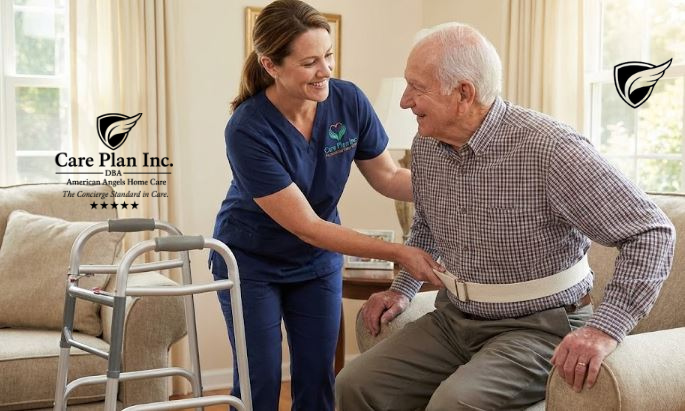
The landscape of senior support in Southeast Michigan is shifting toward models that prioritize the home as the primary site of wellness. For families in communities such as Bloomfield Hills, Birmingham, and the Grosse Pointes, navigating the needs of an aging loved one requires a clear understanding of the professional support systems available. Private duty home care represents a specialized category of non-medical assistance designed to bridge the gap between complete independence and institutional care. By providing structured, personal support within the familiar surroundings of a private residence, this model enables seniors to maintain their dignity and quality of life while mitigating the risks associated with aging.
At Care Plan Inc., private duty care is defined by a nurse-led framework. While the daily, hands-on tasks are performed by professional caregivers, every aspect of the service—from the initial clinical assessment to the ongoing supervision—is directed by licensed nurses. This guide outlines the specific clinical and logistical standards families should expect when engaging professional home-based support in Oakland and Wayne Counties.
Defining Private Duty Home Care in the Michigan Context
Private duty home care is a service model that provides one-on-one, non-medical assistance to individuals who require help with Activities of Daily Living (ADLs) and Instrumental Activities of Daily Living (IADLs). Its objective is to allow individuals to remain in their homes safely. In the state of Michigan, it is essential for families to recognize the regulatory environment: Michigan does not license non-medical home care agencies in the same way it licenses medical home health agencies. Consequently, the burden of ensuring safety and quality rests on the agency’s internal processes. This is why Care Plan Inc. utilizes licensed nurses to lead care planning and supervise caregivers, establishing a professional standard that exceeds general business requirements.
According to the Michigan Department of Health and Human Services (MDHHS), the ability of residents to age in place safely is a primary focus of the state’s senior services. Private duty care serves as the functional “scaffolding” for this goal, providing the physical and cognitive support necessary to prevent accidents that often lead to institutionalization.
Distinction from Medical Home Health
Families must distinguish between private duty care and medical home health care. Medical home health is typically a short-term, physician-ordered service focused on rehabilitation after a hospital stay and is usually covered by insurance. In contrast, private duty home care is a long-term, private-pay service focused on the maintenance of daily health and safety. While the care is non-medical, the nurse-led oversight at Care Plan Inc. ensures that the support remains clinically informed and coordinated with the client’s broader medical strategy.
The Clinical Framework: Nurse-Led Oversight and Supervision
Authority in home care is derived from professional oversight. Families in Southeast Michigan should expect that their home care provider utilizes a structured clinical framework. At Care Plan Inc., this begins with an initial assessment performed by a licensed nurse. This assessment evaluates the client’s physical limitations, cognitive status, home safety risks, and nutritional needs. The data collected during this evaluation forms the basis of a customized care plan.
Nurses supervise the caregivers through regular check-ins and review of documentation. This ensures that the caregiver is following the specific protocols established for the client’s safety. Furthermore, nurses monitor for changes in condition. If a senior in Northville or West Bloomfield experiences a decline in appetite or an increase in confusion, the nurse is responsible for escalating those concerns to the family or the client’s medical providers. This proactive coordination is a hallmark of nurse-led private duty home care.
Medication Reminders (Not Administration)
A critical safety standard in private duty care involves medication management. Families should expect that caregivers provide medication reminders (not administration). This involves ensuring the client takes the correct medication at the correct time as directed by their physician and the nurse-led care plan. Caregivers do not fill pill organizers, give injections, or make decisions about dosages. The nursing team supervises the reminder process to ensure compliance and safety, reducing the risk of adverse reactions due to forgotten or duplicated doses.
Key Services Supporting Independence and Safety
Families should expect a comprehensive suite of services tailored to the specific needs of their loved one. These services are designed to address the physical and logistical challenges that often accompany aging.
Personal Care and Hygiene
Maintaining personal hygiene is essential for physical health and dignity. Caregivers provide assistance with bathing, dressing, and grooming. These tasks are performed with professional discretion, ensuring the senior remains comfortable and safe in high-risk areas like the bathroom. This support is vital for preventing skin breakdown and maintaining the resident’s sense of self-worth.
Mobility and Fall Prevention
Falls are a leading cause of injury for seniors in Michigan. Professional caregivers are trained in fall prevention strategies, providing steadying support during ambulation and assistance with transfers (e.g., from a bed to a chair). The Centers for Disease Control and Prevention (CDC) notes that having a professional present to manage environmental risks significantly reduces fall-related hospitalizations. Families in areas like Troy or Novi should expect their agency to conduct regular safety evaluations of the home environment.
Nutritional Support and Meal Preparation
Proper nutrition is foundational to health stability. Caregivers assist with grocery shopping, meal planning, and the preparation of fresh meals that adhere to the senior’s dietary restrictions. This service ensures that seniors in Grosse Pointe Farms or Birmingham maintain adequate hydration and caloric intake, which supports cognitive function and physical strength.
Who Benefits Most from Private Duty Care?
While many seniors can benefit from some level of support, private duty care is specifically designed for those facing identifiable challenges to their independence. Families should consider this level of care if their loved one falls into one of the following categories.
Seniors with Chronic Conditions
Conditions such as Parkinson’s disease, COPD, or heart failure require a stable routine and consistent monitoring. A professional caregiver ensures that the senior adheres to the lifestyle recommendations of their physicians, such as maintaining a specific activity level or diet. This consistency is essential for stabilizing chronic conditions and preventing the crisis-driven hospital readmissions that often occur when a senior lives alone.
Individuals with Cognitive Decline
Seniors experiencing Alzheimer’s or other forms of dementia require a structured environment to ensure safety. Confusion and memory loss can lead to hazardous situations, such as wandering or neglecting household safety. A nurse-led care plan provides the supervision necessary to manage these risks while offering cognitive engagement that supports the senior’s remaining functional abilities.
Post-Surgical and Post-Hospital Recovery
The transition from a hospital in Metro Detroit back to a home in Grosse Pointe Woods or Bloomfield Hills is a high-risk period. Patients are often weakened and require intensive monitoring to ensure a successful recovery. Private duty care provides the one-on-one attention needed to monitor for complications and assist with the physical demands of recovery, serving as a bridge back to independence.
The Financial Realities and Value of Home Care
Private duty care is primarily a private-pay service. Unlike medical home health, it is generally not covered by Medicare. Families in Southeast Michigan should view this service as a strategic investment in their loved one’s longevity. When comparing the cost of 24/7 in-home care to high-end assisted living facilities, families often find that the one-on-one attention of home care offers superior health outcomes and a higher level of personal satisfaction.
Many families utilize long-term care insurance (LTCI) to offset these costs. Most policies will reimburse for private duty care once a senior requires assistance with a specific number of activities of daily living. Families are encouraged to start an intake to evaluate their specific situation and understand how professional support can be integrated into their financial planning. According to the National Association of Insurance Commissioners (NAIC), early planning is essential for managing the costs associated with aging.
Privacy, Discretion, and Dignity
For families in Michigan’s most distinguished communities, privacy is a paramount concern. Private duty care allows for a level of discretion that institutional settings cannot replicate. Support is delivered one-on-one within the confines of the private residence, ensuring the senior’s routine and social standing are respected. Care Plan Inc. emphasizes a concierge-level approach, where the caregiver’s presence is professional and supportive without being intrusive. This focus on dignity and discretion is a primary reason families in the Grosse Pointes and Bloomfield Hills choose the private duty model.
Choosing a Professional Provider in Southeast Michigan
Since the regulatory environment for home care in Michigan relies heavily on agency-level standards, families must be rigorous in their selection process. A professional provider should demonstrate authority through several key indicators.
Vetting Criteria for Families
- Nurse Leadership: Does the agency employ licensed nurses to lead care planning and supervise staff?
- Employee Screening: Are caregivers employees who have undergone thorough background checks and fingerprinting?
- Clinical Coordination: Is there a clear process for monitoring condition changes and escalating concerns?
- Insurance and Liability: Does the agency carry comprehensive liability and workers’ compensation insurance?
Care Plan Inc. meets these standards by directly employing its staff and utilizing a clinical management team to oversee every case. This ensures a consistent standard of excellence for families in West Bloomfield, Birmingham, and throughout Oakland and Wayne Counties. The National Institute on Aging (NIA) notes that choosing the right support system is the single most important factor for seniors who wish to remain in their homes as they age.
The Process: How Care Is Established
The establishment of private duty care is a structured clinical process. It begins with an initial inquiry, followed by an in-home assessment conducted by a licensed nurse. During this meeting, the nurse evaluates the physical and cognitive needs of the senior and identifies any environmental safety concerns. Following the assessment, a customized care plan is developed, and a caregiver is matched to the client based on both clinical needs and personality compatibility. This professional matching ensures that the transition to receiving care is seamless and that the relationship between the caregiver and the senior is built on trust and professional respect.
Conclusion
Families in Southeast Michigan seeking to support an aging loved one should expect a home care experience defined by professional oversight, clinical precision, and personal dignity. Private duty home care, when executed under a nurse-led model, provides the safety and structure necessary for seniors to age in place in communities like Bloomfield Hills and Grosse Pointe. By focusing on personal care, fall prevention, and nutritional support, professional caregivers address the physical needs of the senior while the nursing team ensures the care remains aligned with broader health goals. Understanding these expectations allows families to make informed, confident decisions that prioritize the safety and independence of their loved ones.
Frequently Asked Questions
Is private duty care the same as having a nurse at home?
No. While nurses lead and supervise the care at Care Plan Inc., the day-to-day services are non-medical and performed by caregivers. These services include assistance with bathing, dressing, and meal prep. The nurse provides the oversight and clinical coordination but does not provide medical treatment in this non-medical setting.
How does Michigan regulate private duty home care?
Michigan does not have a specific license for non-medical home care agencies. Families should look for providers that voluntarily adhere to professional standards, such as employing licensed nurses for oversight and conducting comprehensive background checks on all staff members.
Does Medicare cover the cost of private duty home care?
No. Medicare generally does not cover non-medical, long-term private duty care. This service is typically private-pay or reimbursed through long-term care insurance (LTCI) policies. It is important to review your specific insurance policy to understand your benefits.
Can a caregiver help with my father’s medications?
In a non-medical private duty setting, caregivers provide medication reminders (not administration). This means they ensure the client takes their medication at the prescribed times as outlined in the nurse-led care plan, but they do not fill pill organizers or administer medications directly.
What areas do you serve in Southeast Michigan?
Care Plan Inc. serves families in specific high-value communities across Oakland and Wayne Counties, including Bloomfield Hills, West Bloomfield, Birmingham, Troy, Northville, and Novi, as well as all the Grosse Pointe communities.
What happens if our needs change suddenly?
In a nurse-led model, regular assessments are conducted to monitor the senior’s condition. If needs increase—due to a medical event or cognitive change—the nurse will update the care plan and coordinate with the family and medical providers to ensure the appropriate level of support is provided.