
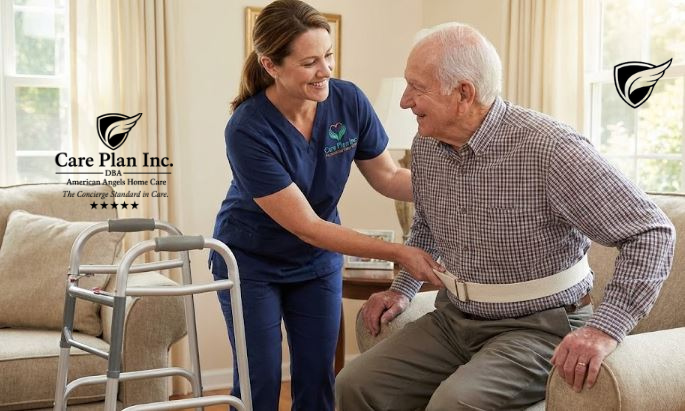
For distinguished families in Southeast Michigan, spanning the historic waterfront estates of Grosse Pointe to the refined neighborhoods of Bloomfield Hills and Birmingham, the diagnosis of memory loss is a profound challenge. Cognitive decline, whether due to Alzheimer’s or other forms of dementia, strips away a senior’s sense of continuity. In 2026, the clinical standard for managing this decline has moved beyond basic supervision. It now centers on the implementation of a consistent caregiver strategy. A familiar face is not merely a comfort: it is a clinical intervention that anchors a senior’s reality and prevents the behavioral escalations often triggered by change. This approach is essential for managing consistent caregiver dementia.
At Care Plan Inc., we recognize that a revolving door of caregivers is catastrophic for someone with memory loss. We implement a nurse led private duty home care model that prioritizes professional continuity. In Michigan, where the home care market is largely unregulated, the presence of a licensed Registered Nurse (RN) to select, train, and supervise a dedicated care team is the critical differentiator. This guide provides a high-authority analysis for families in Oakland and Wayne Counties on why consistency is the cornerstone of effective memory care and how it protects both the senior’s health and the family’s peace of mind.
The Clinical Reality of Memory Loss and Consistency
Dementia affects the brain’s ability to process new information and adapt to environmental shifts. For a senior living in Northville or Troy, even a minor change in the daily routine can trigger acute anxiety or “sundowning” behaviors. According to the Alzheimer’s Association, maintaining a consistent environment and care team is the most effective non-pharmacological way to manage the symptoms of cognitive decline.
Understanding the concept of consistent caregiver dementia is crucial in addressing the needs of those affected by memory loss.
The “New Learning” Deficit
In the moderate to advanced stages of dementia, the brain loses the ability to form new social bonds quickly. Every time a new caregiver enters the home, the senior must restart the process of establishing trust: a task they may no longer be neurologically capable of performing. A consistent caregiver bypasses this deficit. Because the senior recognizes the caregiver’s voice, scent, and touch, their amygdala (the brain’s fear center) remains calm. This physiological stability is what prevents the agitation that often leads to unnecessary medication or emergency room visits.
The Nurse Led Advantage: Curating the Dedicated Team
Families often struggle with high turnover rates when hiring through standard registries or independent platforms. Care Plan Inc. addresses this through a nurse led framework. A licensed Registered Nurse performs the initial assessment and then hand-selects a small, dedicated team of professionals specifically matched to the senior’s personality and clinical needs.
RN-Supervised Continuity
When a caregiver is supervised by an RN, they are trained to identify the “micro-changes” that occur in a senior’s condition. Because they are in the home consistently, they notice when a senior is slightly more lethargic or when their verbal clarity dips: early indicators of clinical issues like a urinary tract infection or dehydration. In a nurse led model, these observations are triaged immediately by the RN, providing a clinical bridge that keeps the senior safe and stable in their Birmingham or West Bloomfield residence.
The Biological Impact of Familiarity
Consistency is more than a preference: it has a measurable impact on a senior’s metabolic and neurological health. For seniors with memory loss, the presence of a known professional lowers chronic cortisol levels, which in turn supports immune function and cardiovascular stability.
Reducing the “Threshold of Agitation”
Every senior has a threshold where environmental stress leads to a behavioral outburst. Inconsistent caregiving constantly tests this threshold. A consistent caregiver knows the senior’s specific “triggers” and “glimmers”—the specific words, songs, or routines that bring them back to a state of calm. This intimate knowledge, curated over months of daily interaction, is the definition of concierge care. It allows a senior in Grosse Pointe Shores to remain the master of their own home environment even as their cognitive abilities shift.
| Care Aspect | Impact of Inconsistent Care | Benefit of Consistent Care |
|---|---|---|
| Anxiety Levels | High: “Stranger Danger” response. | Low: Established trust and safety. |
| Medication Adherence | Variable: Resistance to new people. | High: Established routine and cooperation. |
| Nutrition/Hydration | Declining: Senior may refuse meals. | Stable: Caregiver knows personal tastes. |
| Clinical Triage | Delayed: Subtle changes are missed. | Immediate: Baseline is known by caregiver. |
Essential Skills for Memory Care Professionals
A high-quality caregiver for a senior with memory loss must possess more than just basic training. In a nurse led model, these individuals are trained in specific behavioral de-escalation and cognitive engagement techniques that are vital for families in high-value Southeast Michigan communities.
Validation Therapy and Redirection
Instead of correcting a senior who is confused about the time or place, a trained professional uses validation therapy to acknowledge the senior’s reality and redirect them to a safe activity. This skill requires a deep understanding of the senior’s personal history. A caregiver who has been with a family in Bloomfield Hills for a year knows the names of the grandchildren and the details of the senior’s career, allowing for meaningful engagement that preserves the senior’s dignity.
Supporting the Family Unit: The Emotional ROI
The burden of memory loss often falls heaviest on the spouse or adult children. Attempting to provide 24/7 care personally leads to profound caregiver burnout. Professional nurse led private duty home care allows the family to return to their primary roles. Instead of spending every visit managing hygiene or safety, adult children in Troy or Rochester Hills can focus on emotional connection, knowing that the clinical and physical needs are being handled by a familiar expert.
Protecting the “Sandwich Generation”
The National Institute on Aging (NIA) notes that caregiver stress is a leading contributor to health decline in the family members themselves. A consistent professional team provides the “respite of mind” that family members need to maintain their own careers and wellness. If you are feeling the strain of managing memory loss alone, the most effective next step is to start an intake to have our clinical team evaluate your family’s specific needs.
Integrating Technology for Enhanced Safety
In 2026, technology acts as a vital secondary safety net for seniors with memory loss. However, these tools are most effective when managed by a consistent professional. At Care Plan Inc., we integrate clinical expertise with modern monitoring solutions to provide families with 24/7 peace of mind.
The “Smart” Safety Net
For seniors who wander, we utilize GPS-enabled wearables and non-intrusive floor sensors that alert the caregiver and the supervising nurse immediately. Furthermore, a consistent caregiver facilitates telehealth visits with specialists at Henry Ford Health or Corewell Health. The caregiver provides the physician with an accurate, daily account of behaviors and health markers, ensuring that the medical team has the data needed to optimize treatment.
Legal and Asset Protections for Michigan Estates
Choosing a care provider is also a significant legal and financial decision. Many families in Southeast Michigan consider hiring independent “private” workers to save on costs, but this path carries enormous hidden liabilities. According to the IRS Publication 926, most household workers are employees, not independent contractors. This means the family is responsible for payroll taxes, FICA, and workers’ compensation.
The Agency Model: Liability Mitigation
Engagement with a professional agency like Care Plan Inc. transfers this liability to the provider. We directly employ our staff, manage all taxes, and provide comprehensive professional liability insurance. This protects the family estate from legal suits in the event of an on-the-job injury. For seniors in Grosse Pointe or Bloomfield Hills, this protection of family assets is as critical as the protection of physical health. It provides a level of professional discretion and security that independent hiring cannot offer.
Conclusion: The Path to Clinical Stability
Memory loss is a journey that requires a professional guide. By choosing a nurse led private duty model, families in Southeast Michigan are doing more than just hiring help: they are implementing a clinical strategy that prioritizes the senior’s cognitive and emotional safety. Consistency is the primary tool for preventing the crises that lead to institutionalization. Do not wait for a behavioral emergency to define your parent’s care plan. Take the lead today by engaging with professionals who understand that for a senior with dementia, a familiar face is the best medicine. Proactive planning and a dedicated team are the single most important factors in a successful memory care journey.
Frequently Asked Questions
Why is a consistent caregiver so important for dementia?
Seniors with memory loss rely on “familiarity cues” to stay calm. A new person in the home triggers a “stranger danger” response in the brain, leading to anxiety and agitation. A consistent caregiver establishes a bond of trust that bypasses the senior’s cognitive deficits.
Does Medicare pay for a consistent private duty caregiver?
No. Medicare is designed for short-term, acute medical recovery. Long-term memory care and safety supervision are considered “custodial” and are typically private pay or covered by long-term care insurance (LTCI) policies.
How is a nurse led agency different from a caregiver registry?
A registry is a matchmaking service that connects you with independent contractors. You remain the employer and assume all legal risk. A nurse led agency like Care Plan Inc. employs the staff directly and utilizes licensed Registered Nurses to oversee care and ensure continuity.
How do I know if it is time to hire a memory care specialist?
Look for “red flags”: wandering, leaving the stove on, uncharacteristic irritability, or neglecting hygiene. A clinical assessment by an RN is the only objective way to determine the current risk level and the appropriate amount of support needed.
What happens if our primary caregiver is ill?
Professional managed agencies provide “backup redundancy.” If your assigned professional is unavailable, the agency provides a trained replacement who is briefed on your parent’s specific care plan and behavioral triggers, ensuring there is never a gap in safety.
If you would like to learn how our nurse led coordination can provide your family with the consistency and clinical safety your loved one deserves, please request more information below.

