
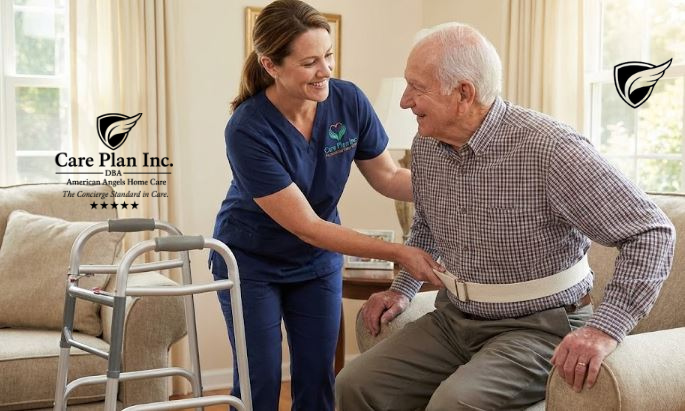
For distinguished families in Southeast Michigan, the concept of aging in place is not merely a preference. It is a commitment to maintaining a lifetime of achievement and social connection. Whether managing a historic estate in Grosse Pointe or a modern residence in Bloomfield Hills, the goal remains the same. Seniors want to live independently in the environments they love. However, the transition from total independence to requiring home safety senior care is often complicated by environmental risks and physical decline. In 2026, achieving longevity at home requires more than just good intentions. It demands a clinical framework that prioritizes safety through professional oversight and a robust approach to home safety senior care.
At Care Plan Inc., we advocate for a nurse-led private duty home care model. This concierge approach ensures that every aspect of the daily routine is governed by clinical authority. In Michigan, where the non-medical home care market is largely unregulated, the presence of a licensed Registered Nurse to oversee caregivers is the critical differentiator. It separates basic companionship from professional health management. This guide provides a high-authority roadmap for families in Oakland and Wayne Counties seeking to fortify their parent’s home for long-term safety and independence.
This guide emphasizes the importance of home safety senior care in creating a supportive environment for aging adults.
The Clinical Imperative: Why Safety Audits Save Lives
Home safety is the foundation of any successful aging-in-place strategy. According to the Centers for Disease Control and Prevention (CDC), falls are the leading cause of injury and death for older adults in the United States. Every second of every day, an older adult falls. Many of these falls occur in the home due to identifiable and correctable environmental hazards. A proactive clinical audit focused on home safety senior care is the first step in preventing the “revolving door” of hospitalizations that often characterizes senior decline.
The Role of the Registered Nurse in Safety Assessments
Unlike standard companion agencies that send a salesperson to perform a home walkthrough, a nurse-led model utilizes a licensed clinical professional. The Registered Nurse evaluates the senior’s physical gait, their cognitive awareness, and the environment simultaneously. This multi-factor assessment identifies subtle risks. For example, a senior in Northville may have a high-entry bathtub that was safe five years ago but now represents a catastrophic fall risk due to changes in their balance. The nurse identifies these gaps and prescribes specific environmental modifications.
Fortifying the Southeast Michigan Residence
High-end homes in Birmingham, Troy, and Novi often feature complex layouts, winding staircases, and heavy architectural details. While beautiful, these features can become obstacles as mobility shifts. Home safety senior care involves modifying these spaces to support the senior’s current physical reality without sacrificing the aesthetic of the home.
The Bathroom: The Zone of Highest Risk
The National Institute on Aging (NIA) identifies the bathroom as the most dangerous room in the house. The combination of hard surfaces, moisture, and the physical strain of transfers makes it a primary site for injuries. A clinical safety plan often includes the following:
Implementing home safety senior care measures can drastically reduce the risk of injuries in high-risk areas like bathrooms.
- Industrial Grab Bars: These must be anchored into the studs of the wall, not held by suction.
- Raised Toilet Seats: These reduce the distance a senior must lower themselves, preventing dizziness or loss of balance.
- Non-Slip Floor Treatments: Specialized coatings can be applied to marble or tile floors to increase traction without changing the appearance of the stone.
Lighting and Visibility Protocols
As the eyes age, the ability to perceive depth and contrast diminishes. Poor lighting is a major contributor to nighttime falls. Families should implement motion-activated lighting in hallways and bathrooms. This ensures that if a senior in West Bloomfield wakes up in the middle of the night, their entire path is illuminated automatically, reducing disorientation.
Incorporating home safety senior care techniques ensures that seniors can navigate their homes with reduced risk.
The Nurse-Led Private Duty Model: Managed Wellness
Daily support is the second pillar of independent living. However, not all support is created equal. Families often choose between hiring a “sitter” or engaging a clinical agency. For those with high-hour needs or complex health profiles, the nurse-led private duty model, where home safety senior care is prioritized, is the gold standard.
Oversight and Triage
When a caregiver is supervised by a Registered Nurse, they are trained to spot micro-changes in health. A slight decrease in appetite, a minor change in skin color, or a subtle shift in verbal clarity can be early indicators of a urinary tract infection or respiratory distress. In a nurse-led framework, these issues are triaged immediately. This often prevents the emergency room visits that frequently lead to permanent facility placement. This clinical bridge is the cornerstone of quality care in communities like Grosse Pointe Farms and Bloomfield Hills.
Medication Adherence vs. Administration
Medication mismanagement is a leading cause of preventable hospitalizations for seniors. In a non-medical setting, caregivers provide medication reminders. They do not perform administration. They ensure the senior takes the correct dose at the correct time as outlined in the nurse-developed care plan. The supervising nurse monitors the medication log and coordinates with the family and physician if side effects or refusal occur.
Our approach to home safety senior care includes thorough caregiver training focused on the specific needs of seniors.
| Feature | Standard Companion Care | Nurse-Led Private Duty |
|---|---|---|
| Initial Audit | General walkthrough | Clinical RN safety assessment |
| Caregiver Training | Basic orientation | Clinical competence training |
| Health Monitoring | Observation only | RN-supervised clinical triage |
| Legal Protection | Often independent workers | W2 employees with liability coverage |
Integrating Technology for Independent Seniors
In 2026, technology is a vital component of home safety senior care. However, technology is most effective when it is part of a managed ecosystem. Professional agencies integrate these tools into the senior’s daily routine to provide a continuous safety net.
Integrating technology to support home safety senior care is essential in today’s environment.
The Smart Home Safety Net
For seniors in Birmingham or Troy, smart home devices like voice-activated assistants and automatic medication dispensers provide significant independence. More advanced tools include fall detection sensors that do not require the senior to wear a pendant. These sensors use radar or AI to detect an impact and alert the supervising nurse immediately. This ensures that help is dispatched even if the senior is unable to call for it themselves.
Telehealth Coordination
Telehealth allows seniors to consult with specialists at Corewell Health or Henry Ford Health without the physical strain of traveling. A professional caregiver can facilitate these virtual visits, taking notes and ensuring that the physician’s recommendations are immediately integrated into the home care plan.
Choosing a care provider is also a financial and legal decision. Many families in high-net-worth communities consider hiring independent caregivers to save on costs. However, this model carries significant risks. The IRS Publication 926 defines most independent caregivers as household employees. This means the family is responsible for payroll taxes, FICA, and workers’ compensation. Engaging in structured home safety senior care through an agency can mitigate these risks.
Choosing a care provider is also a financial and legal decision. Many families in high-net-worth communities consider hiring independent caregivers to save on costs. However, this model carries significant risks. The IRS Publication 926 defines most independent caregivers as household employees. This means the family is responsible for payroll taxes, FICA, and workers’ compensation.
The Agency Advantage: Liability Mitigation
engagement with a professional agency like Care Plan Inc. transfers this liability to the provider. We directly employ our staff, manage all taxes, and provide comprehensive professional liability insurance. This protects the family estate from legal suits in the event of an on-the-job injury or a medical error. For seniors in Grosse Pointe or Bloomfield Hills, this protection of assets is as critical as the protection of physical health.
Local Southeast Michigan Considerations: Snow and Ice Safety
Families in Michigan must also account for the climate. Winter in Oakland and Wayne Counties creates specific safety hazards. Professional home care safety senior care plans for the Michigan winter include:
Developing a robust home safety senior care plan is crucial for families facing Michigan’s winter climate.
- Entryway Management: Ensuring that driveways and walkways are cleared and salted before the senior attempts to leave for an appointment.
- Indoor Humidity Control: Maintaining proper humidity levels to prevent skin breakdown and respiratory irritation during the heating season.
- Emergency Power Readiness: Ensuring that backup generators are operational for seniors who rely on oxygen or other powered medical devices.
Conclusion: Moving from Crisis to Coordination
Independent living for seniors is a goal that requires a professional strategy. By choosing a nurse-led private duty model, families in Southeast Michigan are investing in the safety, dignity, and longevity of their loved ones. Whether your parent is in Birmingham or the Grosse Pointes, the key is to move from reactive crisis management to proactive clinical coordination. Do not wait for a fall or a medical emergency to define your parent’s care plan. Take the lead today by engaging with professionals who prioritize clinical precision and the concierge experience.
Prioritizing home safety senior care will ensure your loved ones maintain their independence and quality of life.
If you are ready to explore how a managed, professional approach can help your parent age in place with grace, the first step is a clinical evaluation. You can start an intake today to have a professional nurse assess your home and your loved one’s needs.
Frequently Asked Questions
Does Medicare pay for home safety modifications?
Generally, no. Medicare is designed for short-term medical events. It does not cover long-term environmental modifications or custodial home safety care. Some Medicare Advantage plans in Michigan may offer limited coverage for specific safety items, but most of these costs are funded privately as part of an aging-in-place strategy.
What is the most important home safety upgrade for a senior?
Effective lighting is a key component of home safety senior care that can greatly reduce risks.
Lighting is often the most impactful upgrade. Ensuring that hallways, stairwells, and bathrooms are brightly and evenly lit can prevent the majority of nighttime trips and disorientation. This is especially true for seniors with vision issues or early-stage cognitive decline.
How is a nurse-led agency different from a registry?
A registry is a “matchmaking” service that connects you with independent contractors. You remain the employer and assume all legal risk. A nurse-led agency like Care Plan Inc. employs the staff and utilizes licensed Registered Nurses to supervise the care, providing a layer of clinical authority that registries do not offer.
How do I know if it is safe for my parent to live alone?
A home safety senior care assessment is essential for determining if aging in place is feasible.
A clinical assessment by an RN is the only way to determine safety objectively. The nurse evaluates mobility, cognition, and the home environment to provide a professional recommendation on whether aging in place is a viable long-term strategy. The Michigan Department of Health and Human Services (MDHHS) also provides resources for senior advocacy and home safety.
Can a caregiver provide medication reminders for high-risk drugs?
Yes. Caregivers are trained to provide reminders for all prescribed medications. The nurse-led care plan ensures the caregiver is prompting the senior at the exact times prescribed, preventing the confusion that often leads to dosing errors.
If you would like to learn whether nurse-led private duty care is the right choice for your family, please request more information below.
Request information here

