
The transition from complete independence to requiring professional support is a significant phase in the lifecycle of aging. For families in Bloomfield Hills and Birmingham, identifying the exact threshold for this transition is often complicated by the desire to respect a parent’s autonomy. However, clinical safety and environmental risk factors provide objective markers that indicate when professional intervention is necessary. Identifying the need to hire a private caregiver is not merely an emotional decision; it is a functional requirement based on a parent’s ability to manage health, safety, and daily operations within the home. Understanding how to hire a private caregiver can alleviate some of these concerns.
Care Plan Inc. provides a model of nurse-led private duty home care that addresses these functional gaps. In this framework, non-medical assistance is delivered by trained caregivers under the direct supervision and coordination of licensed nurses. This structure ensures that care is not just provided, but is managed according to a clinical care plan that monitors changes in condition and prioritizes safety. Understanding the objective indicators of decline is essential for making an informed decision about home-based support.
Defining Private Duty Care in the Michigan Context
Private duty home care refers to non-medical assistance provided in the individual’s residence. This care is distinct from medical home health or skilled nursing, which are typically intermittent and focused on clinical rehabilitation. Private duty care is usually long-term and focuses on Activities of Daily Living (ADLs) and Instrumental Activities of Daily Living (IADLs). It is a strategic solution for seniors who wish to remain at home but require a consistent safety net to do so.
It is important for families to understand the regulatory landscape in the state. Michigan does not license non-medical home care agencies in the same way it licenses medical home health agencies. Because of this lack of a specialized license, the burden of verifying quality and clinical standards falls on the family. Professional agencies like Care Plan Inc. address this by voluntarily implementing nurse-led oversight. This ensures that even though the day-to-day care is non-medical, it is overseen by clinicians who provide care planning, supervision, and coordination. This model is critical for ensuring that the person hired to provide care is part of a structured, professional team.
Objective Physical Indicators for Professional Intervention
Functional decline often manifests through physical “red flags” that compromise safety. When a parent begins to struggle with the physical demands of maintaining their hygiene or navigating their environment, the risk of injury increases. Families should monitor for specific physical indicators that suggest it is time to hire a private caregiver to ensure their loved one’s safety and well-being.
Frequent Falls and Mobility Instability
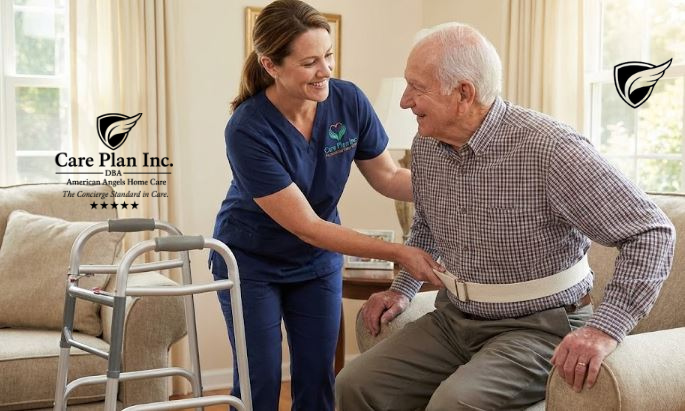
Falls are the leading cause of fatal and non-fatal injuries for older adults. According to the Centers for Disease Control and Prevention (CDC), one out of four older adults falls each year, but fewer than half tell their doctor. In Bloomfield Hills and Birmingham homes, which often feature stairs or complex layouts, mobility decline can be particularly hazardous. If a parent is experiencing “near-misses,” unsteadiness while walking, or bruising from unknown sources, professional mobility assistance is required. Caregivers provide steadying support and assistance with transfers, such as moving from a bed to a walker, which significantly reduces the risk of a catastrophic fall.
Decline in Personal Hygiene
A noticeable decline in personal grooming—such as unwashed hair, body odor, or wearing the same clothing for multiple days—is a clear sign of difficulty with ADLs. These tasks, including bathing and dressing, can become physically taxing or dangerous due to slip risks in the bathroom. A private caregiver provides structured assistance with hygiene, ensuring skin integrity is maintained and the parent remains dignified and comfortable in their home.
Medication Mismanagement
The complexity of managing multiple prescriptions can lead to significant health crises. If a parent is missing doses, taking medications at the wrong time, or failing to refill prescriptions, their health is at risk. Care Plan Inc. caregivers provide medication reminders (not administration) to ensure adherence to the regimen established by the parent’s medical providers. The nurse-led oversight ensures that these reminders are consistent and that any issues are escalated to the supervising nurse immediately.
Cognitive and Behavioral Indicators
Cognitive decline is often subtle in its early stages but poses a severe risk to independence. Behavioral changes are frequently symptoms of cognitive impairment or the frustration associated with a loss of functional ability. Families must look for objective cognitive changes when deciding if it is time to hire a private caregiver.
Memory Impairment and Confusion
Consistent confusion about dates, appointments, or the operation of common household appliances suggests that the parent can no longer manage their environment safely. Memory loss can lead to hazards like leaving a stove on or forgetting to lock doors at night. A private caregiver provides constant supervision, reducing the risk of accidents and providing a stable, structured routine that is vital for those with memory impairment. The National Institute on Aging (NIA) emphasizes that a safe environment is the foundation of memory care.
Social Isolation and Withdrawal
If a parent has stopped participating in social activities, avoids phone calls, or shows a lack of interest in hobbies they once enjoyed, they may be experiencing social isolation. Isolation is a significant risk factor for depression and further cognitive decline. A private caregiver offers companionship and emotional support, ensuring the parent remains engaged. For families in Birmingham, a caregiver can also provide transportation to local appointments or social gatherings, maintaining the senior’s connection to their community.
Personality and Mood Changes
Uncharacteristic irritability, anxiety, or apathy can indicate that a senior is struggling to cope with their limitations. Professional caregivers are trained to provide a calm, structured environment that mitigates these symptoms. Under the nurse-led private duty home care model, these behavioral shifts are monitored by the supervising nurse to determine if a clinical escalation is necessary.
Nutritional and Environmental Warning Signs
The state of a parent’s home and their nutritional intake are clear indicators of their functional status. A parent’s inability to manage the logistical aspects of a household is often a precursor to a health crisis.
Weight Loss and Poor Nutrition
Significant, unintended weight loss is often a sign that a parent is either forgetting to eat or finds the process of meal preparation too difficult. Malnutrition leads to muscle wasting and a weakened immune system. Caregivers assist with meal preparation and nutrition management, ensuring that parents have access to fresh, balanced meals. This support is especially important for seniors with dietary restrictions related to chronic conditions like diabetes or heart disease.
Neglect of the Home Environment
An uncharacteristic accumulation of mail, cluttered living spaces, or an empty refrigerator indicates that Instrumental Activities of Daily Living (IADLs) are being neglected. For families in Bloomfield Hills, maintaining a large residence requires significant energy. When a parent can no longer manage light housekeeping, laundry, or grocery shopping, the home can quickly become unsanitary or unsafe. A private caregiver assumes these responsibilities, ensuring the home remains a clean and safe environment for aging in place.
| Functional Area | Specific Warning Sign | Required Support Level |
|---|---|---|
| Physical Safety | Unexplained bruising or recent falls | Full-time or part-time mobility assistance |
| Nutrition | Empty refrigerator or weight loss | Daily meal preparation and grocery shopping |
| Health Maintenance | Missing medication doses | Structured medication reminders (not administration) |
| Cognitive Health | Confusion with household appliances | Continuous supervision and environmental monitoring |
The Vetting Process: How to Hire a Private Caregiver
Once the need for care is established, the process of hiring a caregiver must be handled with clinical and legal precision. Families must decide between hiring an independent caregiver or working with an established agency. Hiring an independent caregiver often leaves the family with the legal responsibilities of an employer, including tax withholding, workers’ compensation, and the burden of background checks.
The Importance of Background Checks and Vetting
Safety is the primary concern when introducing a stranger into a parent’s home. Professional agencies like Care Plan Inc. perform rigorous background checks, including criminal history, reference verification, and competency testing. Furthermore, because Care Plan Inc. employs its caregivers directly, families are protected from the liability issues associated with independent contractors. Families should ensure that any caregiver hired has been screened for clinical competence and character.
The Nurse-Led Intake Process
A professional engagement should always begin with an assessment. At Care Plan Inc., a licensed nurse conducts an initial consultation to evaluate the parent’s needs and establish a baseline. This assessment is used to create a customized care plan. Families can start an intake to begin this professional evaluation. This process ensures that the caregiver assigned to the home is specifically matched to the parent’s functional requirements and personality.
Managing the Transition to Home Care
Introducing a caregiver into the home requires a structured approach to ensure the parent feels empowered rather than diminished. The goal of private duty care is to enhance independence, not replace it. Communicating this as a “concierge” service that handles the burdens of housework and errands often makes the transition more acceptable to seniors who value their autonomy.
Establishing a Routine
Consistency is key to the success of a caregiving arrangement. A structured daily routine—including set times for meals, hygiene, and social activities—provides a sense of security for the senior. The supervising nurse ensures that the caregiver adheres to this routine and adjusts the care plan as the senior’s needs evolve. This professional coordination ensures that the parent’s environment remains stable even as their health needs change.
Continuous Clinical Oversight
Unlike independent caregivers who may operate in a vacuum, caregivers at Care Plan Inc. are supervised by licensed nurses. This oversight includes regular reviews of the care plan and monitoring for subtle changes in condition. If a caregiver in Birmingham notices a parent is increasingly lethargic or confused, the nurse is notified immediately to evaluate the situation and coordinate with the parent’s medical team. This clinical bridge is essential for preventing hospital readmissions and managing chronic health issues effectively.
Logistical and Financial Considerations
When preparing to hire a private caregiver, families must also consider the logistics of employment and the financial impact. Private duty home care is typically a private-pay service, as non-medical care is generally not covered by Medicare. However, many long-term care insurance policies provide coverage for these services once certain functional criteria are met.
Understanding the Costs in Southeast Michigan
The cost of hiring a private caregiver in Bloomfield Hills and Birmingham depends on the level of care required and the hours of service. While independent caregivers may offer lower hourly rates, the family assumes all legal and financial risks of being an employer. Working with an agency provides a managed service where insurance, backup staffing, and professional supervision are included in the rate. Families should view this as an investment in professional health management rather than just a labor cost.
Insurance and Documentation
For those with long-term care insurance, accurate documentation is required for reimbursement. A nurse-led agency like Care Plan Inc. provides the structured clinical reporting and documentation that insurance companies require to verify the need for care. This professional administrative support reduces the burden on the family and ensures that benefits are maximized. Families are encouraged to consult with their insurance provider to understand the “elimination period” and daily benefit limits of their specific policy.
Jurisdiction and Compliance in Michigan
As noted previously, the lack of a non-medical license in Michigan means that families must look for clinical indicators of quality. An authoritative agency will provide proof of workers’ compensation insurance, professional liability insurance, and a clear policy for caregiver supervision. Agencies that do not use nurses for oversight may lack the clinical competence to manage complex aging needs. Families should prioritize providers that align with the Michigan Department of Health and Human Services (MDHHS) standards for senior safety and advocacy.
Care Plan Inc. ensures full compliance with Michigan employment laws and health safety standards. By choosing a nurse-led model, families are opting for a level of professionalism that is designed specifically for the needs of private-pay families who require high-quality, reliable, and clinically informed support.
Conclusion
Identifying the right time to hire a private caregiver is a critical step in preserving a parent’s safety and quality of life. Whether the triggers are physical, like falls and hygiene decline, or cognitive, like memory loss and isolation, professional intervention provides a necessary safety net. For families in Bloomfield Hills and Birmingham, the nurse-led private duty home care model offered by Care Plan Inc. ensures that this support is delivered with clinical oversight and professional coordination. By recognizing the signs of decline early and establishing a structured care plan, families can ensure that their parents continue to live in the comfort of their own homes while receiving the competent, professional care they deserve.
FAQ
What is the difference between a private caregiver and a home health aide?
A private caregiver provides non-medical assistance like hygiene, meal prep, and medication reminders. A home health aide provides similar tasks but usually works within a medical home health model that includes skilled nursing or therapy. At Care Plan Inc., our caregivers provide non-medical support under the direct supervision of licensed nurses to ensure clinical safety.
How do I know if my parent needs 24-hour care or just a few hours?
This is determined through a functional assessment. If a parent is a high fall risk, has advanced dementia, or cannot manage their own nutrition and hydration, 24-hour supervision may be necessary. For those who are mostly independent but struggle with specific tasks like bathing or errands, a few hours of daily support may be sufficient.
Does Medicare cover the cost to hire a private caregiver?
No. Medicare is designed to cover medical treatments and short-term rehabilitation. It does not cover long-term, non-medical private duty home care. These services are typically paid for privately or through long-term care insurance policies.
What are medication reminders (not administration)?
Caregivers provide medication reminders, which means they remind the senior to take their prescribed doses at the correct times. They do not fill pill organizers, give injections, or make decisions about dosages. These tasks are managed by the parent’s medical providers or the supervising nurse as part of the clinical care plan.
How does Care Plan Inc. supervise its caregivers?
Care Plan Inc. utilizes a nurse-led model where licensed nurses perform regular on-site visits, review care documentation, and monitor for changes in the senior’s condition. This ensures that the care provided remains safe and that the caregiver is adhering to the structured care plan.
What happens if our caregiver is sick or unavailable?
When you work with a professional agency like Care Plan Inc., the agency is responsible for providing a trained backup caregiver. This ensures that your parent is never left without the support they need, a common challenge when hiring independent caregivers.