
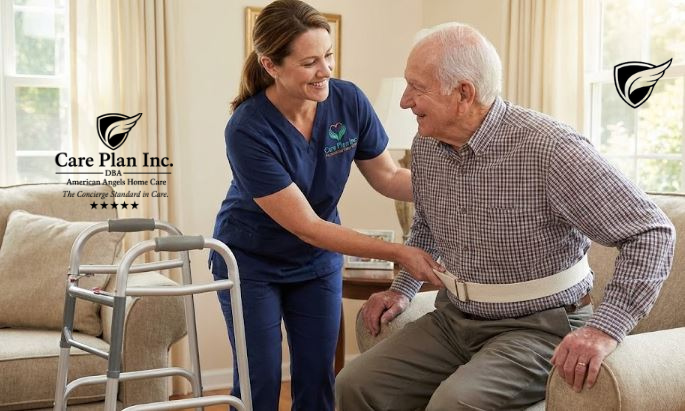
For distinguished families in Southeast Michigan, spanning the historic waterfront estates of Grosse Pointe to the refined neighborhoods of Bloomfield Hills and Birmingham, the transition to requiring in-home assistance is a pivotal life event. It is not merely about finding someone to help with household chores: it is about selecting a clinical partner capable of preserving a hard earned lifestyle while ensuring medical safety. In 2026, the standard for elite home support has moved beyond basic companion services. It now encompasses a sophisticated nurse-led private duty home care model that prioritizes clinical authority and longevity. Understanding the specific nuances of professional oversight is essential for families who demand a concierge level of coordination.
At Care Plan Inc., we recognize that care planning is a dynamic health strategy. By utilizing licensed Registered Nurses to oversee every aspect of the care plan, we ensure that whether the need is for post-surgical recovery or chronic condition management, the quality of life remains the primary focus. This guide provides a high-authority analysis of the critical questions families must ask when selecting a home care agency, including the essential questions to ask home care, specifically the questions to ask home care, localized for families in Oakland and Wayne Counties who require professional clinical precision.
The Clinical Foundation: Why a “Sitter” is Not Enough
When families begin their search, they often focus on the immediate need: a set of hands to help with bathing or meal preparation. however, high-net-worth families in Northville or Troy must look deeper. The real value of a care partner lies in their ability to prevent the “unseen” risks: unobserved falls, medication errors, and slow nutritional decline. According to the National Institute on Aging (NIA), the ability to age in place safely depends on the integration of support systems that match the individual’s specific medical and physical acuity.
Question 1: Who Performs the Initial Assessment and Develops the Plan?
In a standard agency, an administrative “care coordinator” may perform the walkthrough. In a concierge, nurse-led model, this task is reserved for a licensed Registered Nurse (RN). A nurse sees beyond the environment: they see the physiological and neurological markers that dictate safety. For a senior recently discharged from Corewell Health or Henry Ford Health, an RN assessment evaluates gait stability, cognitive triggers, and pharmaceutical interactions. This clinical baseline is the only way to build an effective personalized home care plan.
The Nurse-Led Advantage: Clinical Peace of Mind
Michigan remains one of the few states where the non-medical home care industry is largely unregulated. This means any individual can call themselves a “caregiver.” For families who require a higher standard, the nurse-led model is the only way to ensure clinical authority. At Care Plan Inc., our Registered Nurses perform the initial assessment and provide ongoing supervision of all care plans.
Question 2: What Level of Clinical Oversight is Provided for Daily Care?
Ask specifically how the agency monitors the senior’s health. Do they rely on subjective caregiver notes, or is there an RN performing regular site visits and triage? A nurse-led model implements objective documentation. The nurse monitors for subtle shifts in condition: early signs of a urinary tract infection or respiratory changes, which often manifest as increased confusion in the elderly. This clinical bridge is the cornerstone of high-quality private duty care in communities like Bloomfield Hills and Grosse Pointe Farms.
| Feature | Standard Registry/Agency | Nurse-Led Concierge Model |
|---|---|---|
| Assessment Professional | Administrative or Sales Staff | Licensed Registered Nurse (RN) |
| Caregiver Employment | Independent Contractors (1099) | W2 Employees with Full Insurance |
| Clinical Triage | None: Family must call the doctor | Direct RN oversight and physician liaison |
| Liability Protection | Limited: Family may be the “employer” | Comprehensive: Agency assumes all risk |
Vetting Caregiver Qualifications and Training
The person in the home is the frontline of the care strategy. Families must ensure that this professional is not only empathetic but technically competent to handle the specific needs of the senior.
Question 3: How are Caregivers Vetted and Trained for High-Acuity Needs?
Beyond standard background checks, ask about specialized training. For a senior in Birmingham or West Bloomfield with Parkinson’s or Alzheimer’s, the caregiver must be trained in behavioral de-escalation and specific mobility assistance techniques. Reputable agencies provide ongoing education modules overseen by their nursing staff. Furthermore, verify the employment model. Hiring through a “registry” (1099 model) often leaves the family responsible for payroll taxes and workers’ compensation. A professional W2-based agency assumes these liabilities, protecting the family’s assets.
Question 4: How is Compatibility and Continuity Managed?
For a senior who values their privacy and social standing, the presence of a caregiver must feel like a premium concierge service rather than an intrusion. Ask the agency about their matching process. How do they account for the senior’s temperament, intellectual interests, and lifestyle? Moreover, what is the plan for “backup redundancy”? If a primary caregiver is ill, a managed agency provides a trained replacement who is already briefed on the clinical plan of care, ensuring continuity of care.
Financial Realities and Asset Protection
Choosing a care provider is also a significant legal and financial decision. Families in high-net-worth Michigan communities must consider the long-term sustainability of the care plan and the protection of their estate.
Question 5: What are the Costs, and How is Liability Managed?
While the initial cost of home care may seem significant, it is often more cost-effective than a permanent move to a high-end facility. Ask about pricing structures (hourly vs. flat-rate) and whether the agency accepts long-term care insurance (LTCI). A nurse-led agency like Care Plan Inc. provides the rigorous clinical documentation required by insurers to approve claims. Furthermore, ask about professional liability and bonding. Choosing an agency that assumes all employment risks is critical for protecting family wealth from legal suits in the event of an on-the-job injury or medical error.
If you are ready to evaluate a clinical, concierge approach for your family, the most effective next step is to start an intake to speak with a clinical coordinator.
Communication and Reporting Protocols
Transparency is the foundation of trust between the family and the care partner. Families in Grosse Pointe or Bloomfield Hills often include busy professionals or adult children living out of state who require consistent, clear updates.
Question 6: How Will the Agency Keep the Family Informed?
Does the agency utilize digital care logs or a client portal? In a nurse-led framework, communication is not just about daily tasks: it is about clinical trends. The supervising RN should provide regular updates on the senior’s functional status, medication adherence, and nutritional stability. This level of transparency ensures that the family, the caregiver, and the senior’s physicians are always aligned. The Medicare standards for care coordination emphasize that these communication loops are vital for reducing hospital readmissions.
Emergency Preparedness and Safety Protocols
The home environment is unpredictable. High-authority care partners implement rigorous safety protocols to manage both medical emergencies and Michigan’s specific environmental risks (such as power outages or severe winter weather).
Question 7: What are the Emergency and Triage Protocols?
Ask the agency how they handle a change in mental status or a “near-miss” fall at 2:00 AM. In a nurse-led model, there is a clear chain of command. The caregiver triages the situation and contacts the on-call RN immediately. This professional coordination prevents the panic-driven emergency room visits that often lead to a permanent loss of independence. Furthermore, ask about “Environmental Fortification”: does the agency perform regular safety audits of the home to identify hazards before they lead to an injury?
Conclusion: The Path to Clinical Stability
Choosing a private care partner is an act of respect for the senior’s history and a commitment to their future. By asking the right clinical and logistical questions, families in Southeast Michigan can move from a state of worry to one of coordination. The concierge private duty model, led by licensed Registered Nurses, provides the safety, dignity, and autonomy that high-achieving seniors deserve. Do not wait for a medical crisis to define your parent’s care plan. Engage with professionals today to build a roadmap for longevity, stability, and quality of life in the comfort of home.
Frequently Asked Questions
What is the benefit of a nurse-led agency over a standard one?
A nurse-led agency utilizes licensed Registered Nurses to perform clinical assessments, develop care plans, and supervise caregivers. This provides a layer of medical authority and triage that standard agencies (which are often run by administrative staff) cannot offer. It ensures that subtle health changes are caught before they become medical crises.
Does Medicare pay for private duty home care?
No. Medicare is designed for short-term, acute medical recovery. Long-term “custodial” care, which includes help with daily living activities and 1:1 safety supervision, is typically funded privately or through long-term care insurance (LTCI). Many families in Southeast Michigan utilize LTCI benefits to cover these concierge services.
How is the “caregiver matching” process handled?
At Care Plan Inc., we consider both clinical needs and personality compatibility. We evaluate the senior’s intellectual interests, social preferences, and history to match them with a professional who will be a social and functional fit. This ensures that the presence of a caregiver enhances the senior’s quality of life.
Can we change our caregiver if they are not a good fit?
Yes. In a concierge model, the senior’s comfort is paramount. A professional agency will manage the transition to a new professional immediately, ensuring there is no gap in safety or service while finding a more compatible match.
How do I know if it is safe for my parent to stay at home?
A clinical assessment by a Registered Nurse is the only objective way to determine safety. The nurse evaluates physical mobility, cognitive clarity, and the home environment to provide a professional recommendation on whether aging in place is a viable long-term strategy for your specific situation.
If you would like to learn whether nurse-led coordination is the right choice for your family’s needs in Southeast Michigan, please request more information using the form below.

