
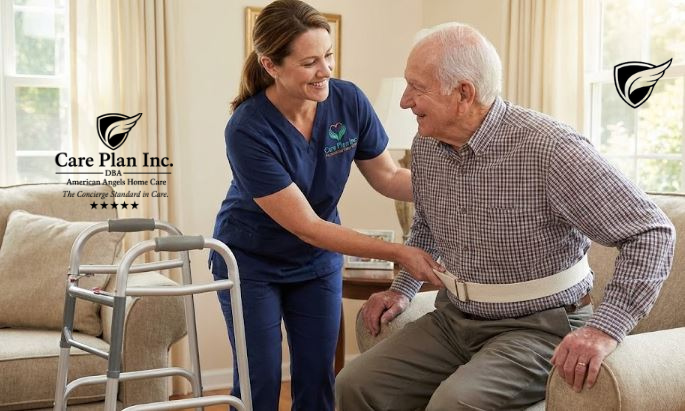
For distinguished families in Southeast Michigan, spanning the refined neighborhoods of Bloomfield Hills and Birmingham to the historic waterfront estates of Grosse Pointe, the standard for aging in place has evolved. No longer is basic companionship sufficient for seniors who have lived lives of achievement and high standards. Today, personalized home care plans represent a sophisticated clinical strategy designed to preserve independence, dignity, and health. In 2026, the gold standard for this support is found in a concierge model that treats every client as a unique ecosystem of physical, cognitive, and social needs.
At Care Plan Inc., we recognize that a generic approach to home care is a disservice to the senior and a risk to their safety. We implement a nurse-led private duty home care model where every detail of the daily routine is governed by clinical authority. In Michigan, where the non-medical home care market is largely unregulated, the presence of a licensed Registered Nurse (RN) to develop and supervise care is the critical differentiator. This guide explores the meticulous process of how care plans are personalized to ensure longevity and quality of life for seniors in Oakland and Wayne Counties.
The Clinical Foundation: Why Assessment Matters
Personalization begins long before a caregiver ever enters the home. It starts with a comprehensive clinical baseline. Many agencies send a salesperson to conduct a “walkthrough,” but a true concierge model utilizes a Registered Nurse. This is because a nurse sees beyond the environment. They see the physiological and neurological markers that dictate safety and stability.
The Multi-Factor RN Assessment
A nurse-led assessment in a Northville or Troy home evaluates four primary domains:
- Physical Mobility and Gait: Identifying fall risks by evaluating the senior’s balance and transfer abilities.
- Cognitive Acuity: Establishing a baseline for memory and executive function to track changes over time.
- Pharmaceutical Compliance: Reviewing the medication regimen to identify potential side effects like dizziness or confusion.
- Environmental Hazards: Auditing the residence for risks such as poor lighting, slippery floors, or unmonitored exits.
According to the National Institute on Aging (NIA), the ability to age in place safely depends on the integration of support systems that match the individual’s specific health profile. Without this clinical baseline, a care plan is merely a list of chores. With it, the plan becomes a managed health strategy.
Developing S.M.A.R.T. Care Goals
Personalization means setting goals that are Specific, Measurable, Achievable, Relevant, and Time-bound. For a senior in Grosse Pointe recovering from a procedure at Corewell Health or Henry Ford Health, the goal might be functional recovery. For a senior in Bloomfield Hills with progressive dementia, the goal is behavioral stability and cognitive anchoring.
Functional Goals vs. Maintenance Goals
For clients who have experienced a health event, personalized home care plans focus on “reablement.” The caregiver provides the 1:1 standby assistance needed for the senior to perform their physical therapy exercises safely. For those with chronic conditions, the goals focus on “metabolic stability.” This involves strict adherence to hydration protocols and nutritional plans designed to prevent the clinical decline that often leads to hospital readmissions. The supervising nurse reviews these goals quarterly, adjusting the plan as the senior’s needs evolve.
| Care Category | Standard Agency Goal | Concierge Nurse-Led Goal |
|---|---|---|
| Safety | Provide supervision. | Zero falls through RN-led gait monitoring. |
| Nutrition | Prepare meals. | Achieve metabolic stability via MD-prescribed diet. |
| Medication | Give reminders. | 100% compliance monitored by RN oversight. |
| Social | Be a companion. | Maintain cognitive reserve through bespoke engagement. |
Integrating Client Preferences and Lifestyle Anchors
A care plan that ignores a senior’s personal history is bound to cause friction. True personalization respects the “Lifestyle Anchors” that provide a senior with a sense of identity. If a client in Birmingham has spent fifty years hosting family dinners, their care plan should facilitate that tradition rather than replacing it with institutional efficiency.
The Importance of Cultural and Personal Compatibility
Professional care planning involves matching the caregiver not just on skill, but on temperament and intellectual compatibility. A senior who values intellectual discourse requires a professional who can engage in complex conversation. At Care Plan Inc., we utilize the initial RN assessment to understand these nuances. This ensures that the presence of a caregiver feels like a premium concierge service rather than an intrusion on the household’s privacy.
The Role of RN Supervision in Daily Care
Personalization is not a one-time event. It is a continuous feedback loop. In a nurse-led model, the RN provides ongoing supervision of the caregivers. This is vital for early detection of health changes that an untrained family member or companion might miss.
Proactive Triage and Health Monitoring
When a caregiver is supervised by an RN, they are trained to spot “micro-changes” in health. A slight decrease in appetite, a minor change in skin color, or a subtle shift in verbal clarity can be early indicators of a urinary tract infection (UTI) or respiratory distress. In a nurse-led framework, these issues are triaged immediately. This often prevents the emergency room visits that Medicare.gov identifies as a primary risk for seniors with chronic conditions. This clinical bridge is the cornerstone of high-quality private duty care in communities like Northville and West Bloomfield.
Technology as a Tool for Personalization
In 2026, technology is a vital component of personalized home care plans. However, technology is most effective when it is part of a managed ecosystem overseen by clinical professionals.
Health Monitoring and Telehealth Coordination
Smart home devices, such as automated medication dispensers and fall detection sensors that do not require a wearable pendant, provide a secondary safety net. Furthermore, a professional caregiver can facilitate telehealth visits with specialists at institutions like Henry Ford Health. By taking notes and ensuring that the physician’s recommendations are immediately integrated into the daily care plan, the caregiver acts as a medical liaison. This level of coordination ensures that the family, the doctor, and the care team are always aligned.
Protecting Family Assets: The Agency Model Advantage
Personalization also extends to the legal and financial structure of the care. Many families in high-net-worth Michigan communities consider hiring independent caregivers to save on costs. However, this model carries significant risks. According to the IRS Publication 926, most independent caregivers are classified as household employees. This means the family is responsible for payroll taxes, FICA, and workers’ compensation.
Liability Mitigation and Discretion
Engagement with a professional agency like Care Plan Inc. transfers this liability to the provider. We directly employ our staff, manage all taxes, and provide comprehensive professional liability insurance. This protects the family estate from legal suits in the event of an on-the-job injury or a medical error. For seniors in Grosse Pointe or Bloomfield Hills, this protection of family wealth is as critical as the protection of physical health. It provides a level of professional discretion and security that independent hiring cannot offer.
Case Study: The Impact of a Managed Plan
Consider a senior in Troy living with early-stage Parkinson’s. A standard agency might provide a “companion” to help with laundry. A personalized home care plan from Care Plan Inc. would look significantly different. It would include:
- RN Oversight: Monitoring for the “freezing” episodes common in Parkinson’s.
- Nutritional Management: A diet high in fiber and protein to manage the side effects of medications.
- Physical Engagement: Supervised walking routines designed to maintain motor skills.
- Medication Reminders: Ensuring the complex dosing schedule of Carbidopa/Levodopa is followed with precision.
This managed approach allows the senior to remain in their home longer, maintaining their social status and dignity while receiving the highest standard of clinical support. If you are ready to move from worry to a professionally managed plan, the first step is a clinical evaluation. You can start an intake today to have a professional nurse assess your loved one’s needs.
Conclusion: The Path to Dignified Longevity
Personalization is the difference between surviving at home and thriving at home. By choosing a nurse-led private duty model, families in Southeast Michigan are investing in a wellness strategy that honors the senior’s past and protects their future. Whether your parent is in Birmingham or the Grosse Pointes, the key is to move from reactive crisis management to proactive clinical coordination. Do not wait for a fall or a medical emergency to define your parent’s care plan. Take the lead today by engaging with professionals who prioritize clinical precision and the concierge experience. Proactive planning is the single most important factor in a successful aging-in-place journey.
Frequently Asked Questions
What is the most important part of a care plan?
The initial clinical assessment is the most important part. Without an objective understanding of the senior’s physical and cognitive status by a licensed professional, the care plan cannot effectively mitigate risks like falls or medication errors.
How often should a personalized care plan be updated?
A care plan should be a living document. At Care Plan Inc., we review and adjust plans as needed based on the senior’s condition, but at minimum, a formal reassessment should happen every 90 days or after any health event like a hospitalization.
Does Medicare cover personalized home care plans?
Generally, Medicare does not cover long-term “custodial” care, which includes help with daily living activities. Most families fund these bespoke services privately or through long-term care insurance (LTCI). It is vital to check your specific policy for benefits.
How is a nurse-led agency different from a registry?
A registry is a matchmaking service that connects you with independent contractors. You remain the employer and assume all legal and clinical risk. A nurse-led agency employs the staff directly and utilizes licensed Registered Nurses to supervise every aspect of the care, providing clinical authority that registries do not offer.
Can a caregiver manage medical equipment like oxygen?
In a non-medical setting, caregivers provide monitoring and assistance with the setup of such devices as part of the nurse-led care plan. Any clinical adjustments or medical treatments must be overseen by a medical professional or the supervising nurse according to Michigan guidelines.

